









Picture the finish line of a marathon, the grand opening of a new store, or the entrance to a vibrant festival. What's the first thing you see? Often, it's a massive, colorful inflatable arch, welcoming participants and setting the tone for the entire event. These structures are more than just decoration; they are powerful branding tools, landmarks, and photo opportunities all rolled into one. They create an instant sense of occasion and excitement.
After the initial "wow" factor, the next logical thought for any event planner or business owner is, "That's fantastic, but what does something like that cost?" It's a valid and crucial question. The price of an inflatable arch isn't a simple one-size-fits-all number. It's a combination of various factors, from a T-shirt to a car—the price reflects the quality, features, and level of customization involved.
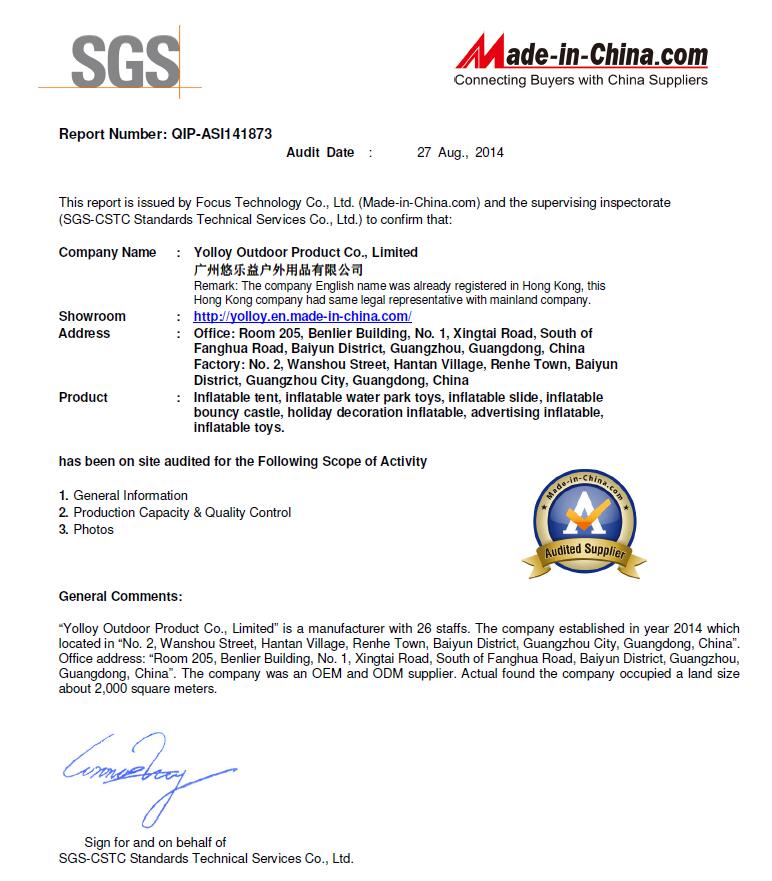
As a company dedicated to providing professional and qualified inflatable products, we at Yolloy believe in transparency. Our goal is to empower you with knowledge so you can make the best investment for your needs. This guide will demystify the pricing of an inflatable arch, breaking down every component that influences the final cost. We'll explore size, materials, branding, accessories, and more, so you can understand exactly what you're paying for and how to get the most value for your budget.
Factor 1: The Foundation - Size and Shape
Unsurprisingly, the most significant factor determining the price of an inflatable arch is its physical size. This is the starting point for any quote because it directly dictates the amount of material required and the labor needed to construct it.
Size: The Bigger, The Bolder, The Higher the Budget
It's a simple equation: a larger arch requires more fabric, more thread, more internal reinforcements, and more time on the cutting and sewing tables. Think about the difference between a modest 15-foot wide arch for a local school fun run and a colossal 50-foot arch spanning a multi-lane city street for a major marathon. The latter could easily use three to four times more material, and its complexity scales accordingly.
The dimensions that matter are:
- Span (Width): The distance from the inside of one leg to the inside of the other. This determines the clearance for people or vehicles.
- Height: The total height from the ground to the highest point of the arch.
- Tube Diameter: The thickness of the arch's legs and top beam. A thicker tube creates a more robust and substantial look but also uses significantly more material.
Beyond the material, a larger arch necessitates a more powerful (and thus more expensive) blower to keep it inflated. It will also be heavier and bulkier, which increases shipping and handling costs. When considering size, think realistically about your event space and purpose. An arch that's too small can get lost in a large venue, while an overly massive one might be impractical for a smaller setting.
Shape and Structural Complexity
After size, the shape of the arch is the next major consideration. While we often picture a classic rounded arch, the possibilities are virtually limitless, and this creativity influences the cost.
Standard Shapes: These are the most cost-effective options because the patterns and construction methods are well-established. They include:
- Rounded Arches: The classic "half-moon" shape, perfect for finish lines.
- Angled Arches: A modern look with angled corners instead of a smooth curve.
- Squared Arches: A rectangular, gate-like structure that offers large, flat surfaces for branding.
Custom Shapes: This is where your brand can truly shine, but it comes with a higher price tag. A custom shape involves creating a brand-new 3D model and pattern from scratch. This requires significant design and engineering time to ensure the structure is stable and inflates correctly. Examples include arches shaped like a running shoe, a giant bottle, a company mascot, or an arch with intricate castle-like turrets. The more complex the geometry, the more labor-intensive the cutting, sewing, and internal baffling will be, which directly translates to a higher cost. Here at Yolloy, our design team excels at this, working with clients to create detailed mockups to perfect a custom design before a single piece of fabric is cut.
Factor 2: The Core of Quality - Materials and Construction
An inflatable arch is only as good as the materials it's made from. This is an area where cutting corners can lead to a product that fades, tears, or fails, ultimately costing you more in the long run. The type and quality of the fabric and the method of construction are critical price determinants and a key indicator of the product's lifespan and safety.
The Fabric of Durability
You will encounter a few different material options when shopping for an inflatable. Understanding the difference is key to choosing the right product for your needs.
- Commercial-Grade PVC Tarpaulin: This is the gold standard for high-quality, durable inflatable products, and it's our material of choice for most applications. A high-quality PVC tarpaulin is a composite material, not just a simple sheet of plastic. It typically consists of a strong polyester scrim (a woven fabric base) sandwiched between two layers of PVC coating. This construction makes it incredibly strong, puncture-resistant, waterproof, and fire-retardant. We ensure our materials meet strict safety standards like EN71, giving you peace of mind. While it's the most expensive material, its longevity and resilience make it the best investment for outdoor use and frequent deployment.
- Oxford Cloth (Nylon/Polyester): This is a lighter-weight, woven fabric. It's significantly cheaper and lighter than PVC, making the inflatable easier to handle and transport. However, it is far less durable. It's more susceptible to tearing, and its water resistance and UV protection are inferior to PVC. These are often used for smaller, indoor, or very occasional-use inflatables. For a professional-grade arch that needs to withstand the elements, PVC is the superior choice.
- Specialty Materials (e.g., TPU): For some products, particularly our water-based inflatables like the DWF floating platforms or yacht pools, we use advanced materials like eco-friendly TPU. While not typically used for a standard arch, our experience with these high-end materials underscores our commitment to using the right, highest-quality material for every specific job.
Construction Methods: Sewn vs. Sealed
How an inflatable is held together is just as important as the fabric it's made from. There are two primary methods:
Constant-Air (Sewn) Construction: This is the most common method for large structures like an inflatable arch or an inflatable tent. The pieces of fabric are cut and then sewn together with heavy-duty, multi-filament nylon thread. Critical stress points are reinforced with double or even quadruple stitching. Because sewing needles create tiny holes in the fabric, these inflatables are not airtight. They require a blower to be constantly running to maintain pressure and keep the structure rigid. This method is robust, reliable, and allows for the creation of very large and complex shapes.
Airtight (Sealed) Construction: In this method, the seams are not sewn but are welded together using high-frequency heat, creating a permanent, airtight bond. Once inflated, the valve is closed, and the blower can be removed. This results in a silent operation, which is a significant advantage for certain indoor or quiet environments. However, this process is more technologically demanding and is typically reserved for products made from specific materials (like TPU or specialized PVC) that can be reliably welded. Sealed products, like our inflatable water parks, are generally more expensive than their constant-air counterparts due to the specialized machinery and labor involved. For most event arches, the constant-air method provides the best balance of cost, durability, and performance.
A Note on Quality: A lower price often points to compromises in material or construction. This could mean thinner PVC, single stitching, or inadequate internal reinforcement. A well-built arch from a reputable manufacturer will have strong internal baffles that help it maintain its shape and withstand wind, along with securely anchored D-rings for tethering. These are "hidden" features that contribute to the cost but are essential for safety and longevity.
Factor 3: Making It Yours - Branding and Customization
An unbranded arch is just a shape. The real power of an inflatable arch comes from its ability to carry your message, logo, and colors. The method and complexity of the branding are a major part of the overall cost. This is where a simple custom design process is crucial to get what you want. We pride ourselves on working with clients every step of the way, providing mockups and revisions until the design is perfect.
Printing and Artwork Application
How your graphics are applied to the arch has a huge impact on both the look and the price.
- Full Digital Printing: This is the premium option for maximum visual impact. The artwork is printed directly onto the PVC material before the arch is even sewn together. This allows for vibrant, full-color, high-resolution graphics that can cover the entire surface of the arch. You can have gradients, photographs, and intricate patterns. While this is the most expensive printing method, it delivers a seamless, professional, and incredibly durable finish.
- Removable Banners: This is an extremely popular and versatile solution. The arch itself can be a base color, and it will have Velcro or D-ring attachment points for printed banners. This is a brilliant, cost-effective strategy if you plan to use the arch for multiple events with different sponsors or themes. You pay for the arch once and then only need to purchase new, relatively inexpensive banners for each event. The initial cost is lower than full printing, and the long-term flexibility is a huge advantage.
- Sewn-In or Applied Logos: For simple logos or text, another option is to have the shapes cut from different colored PVC and sewn directly onto the arch. This creates a durable, raised effect but is only suitable for simple, solid-color designs. It's a labor-intensive process and can be more expensive than banners for complex artwork.
Structural Add-ons and Special Features
Want to take your arch to the next level? Custom structural additions will make it stand out, but they will also add to the cost.
- 3D Elements: Adding three-dimensional objects to your arch is a surefire way to grab attention. This could be a 3D version of your logo popping out from the top, a product replica attached to one of the legs, or even a full mascot character sitting on the arch. Each 3D element is essentially its own mini-inflatable that must be designed, patterned, and attached, increasing both material and labor costs.
- Internal Lighting: To make your arch shine—literally—you can opt for internal LED lighting. This is perfect for evening races, nighttime festivals, or indoor events in dimly lit halls. Systems can range from simple, static white lights to fully programmable RGB LEDs that can change color or create patterns. The cost includes the lights themselves, the wiring, the internal fixtures to hold the lights in place, and the labor to install it all safely.
Factor 4: The Complete Package - Accessories and Logistics
The arch itself is the main event, but it can't function without its supporting cast. A professional supplier will provide a complete kit, and the quality of these accessories, along with shipping, is factored into the final price.
Blower
For a constant-air arch, the blower is its lifeblood. The cost of the blower depends on its power (measured in CFM, or Cubic Feet per Minute), its durability, and its certifications (like CE/UL). A larger arch requires a more powerful, and therefore more expensive, blower. A reputable company like Yolloy will always include the correctly sized and certified blower with your purchase, ensuring safe and effective operation right out of the box.
Standard Accessories
A complete package should always include the following, and their quality can vary:
- Storage Bag: A heavy-duty vinyl bag is essential for protecting your investment during transport and storage.
- Anchoring System: This includes high-tensile strength ropes or straps and heavy-duty ground stakes or weight bags for securing the arch safely.
- Repair Kit: This typically contains patches of the original material and adhesive, allowing you to fix minor punctures on-site.
Shipping and Delivery
Don't forget logistics! Inflatable arches, especially large ones made from commercial-grade PVC, can be heavy. Shipping costs are determined by the weight and dimensions of the packaged product and the destination. You'll often have a choice between air freight (faster, more expensive) and sea freight (slower, more economical for large orders). A reliable supplier is also defined by their logistics management. At Yolloy, we take pride in our 95% on-time delivery rate, communicating with clients throughout the process and ensuring there are no surprises.
Summary Table: Inflatable Arch Cost Factors
To help visualize how these elements come together, here is a table summarizing the key factors and how they typically affect the price from low to high.
| Factor | Lower Cost Option | Mid-Range Option | Higher Cost Option |
|---|---|---|---|
| Size | Small (e.g., 10-15 ft span) | Medium (e.g., 20-30 ft span) | Large / Oversized (e.g., 40+ ft span) |
| Shape | Standard (Round, Angled, Square) | Standard with minor modifications | Fully custom shape with complex geometry |
| Material | Lighter Duty Oxford Cloth | Standard Commercial PVC Tarpaulin | Heavy-Duty, specialized PVC or custom materials |
| Branding | Removable Velcro Banners | Partial Digital Printing | Full-coverage Digital Printing |
| Features | None (Arch only) | 3D Lettering or Simple Logos | Complex 3D elements, internal LED lighting |
| Overall Price | $ | $$$ | $$$$$ |
Conclusion: An Investment in Impact
As you can see, the cost of an inflatable arch is a dynamic figure based on your specific vision and requirements. The final price is a reflection of its size, the quality of its materials like the durable PVC tarpaulin , the complexity of its construction, and the level of branding and customization you choose.
It's helpful to reframe the question from "How much does an arch cost?" to "What is the value of the impact I want to create?" A well-made, beautifully designed inflatable arch is not an expense; it's an investment. It's an investment in brand visibility, in creating a memorable experience for your audience, and in projecting an image of professionalism and excitement. Whether you need a simple finish line for a school race or a fully illuminated, custom-shaped masterpiece for a product launch, understanding these cost factors allows you to have a more productive conversation with your manufacturer.
At Yolloy, our mission is to provide professional and qualified products that meet your exact needs. We guide you through the entire process, from the initial custom design concept and mockups to final delivery, ensuring the result is an inflatable arch that not only fits your budget but also exceeds your expectations for years to come. When you're ready to make a statement at your next event, you are now equipped with the knowledge to choose the perfect inflatable arch to carry your brand to new heights.