Products Category
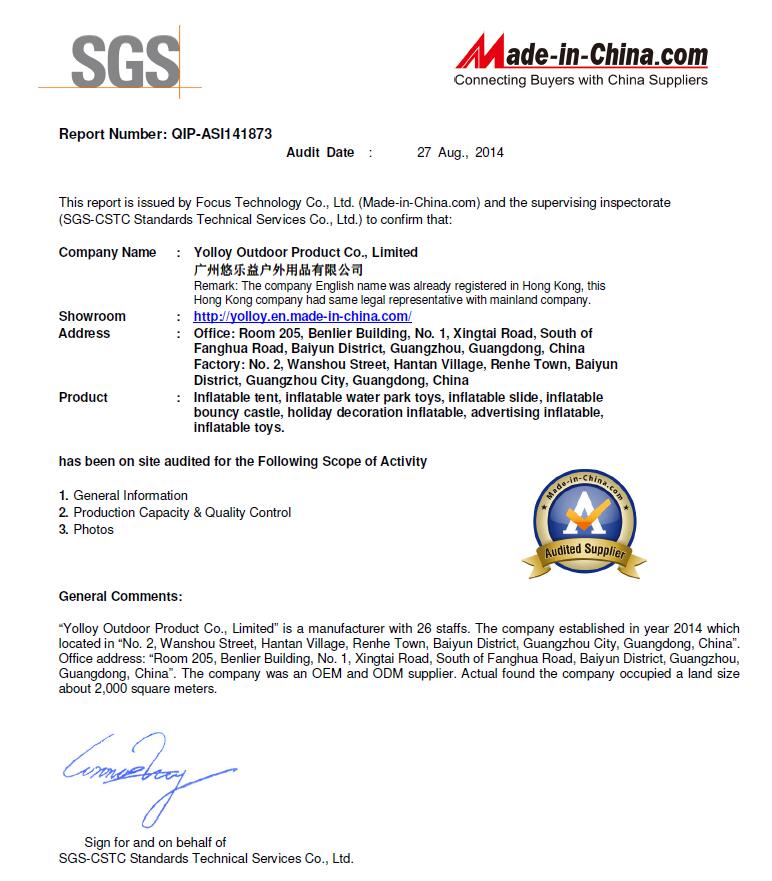
Certification

News

• New Order Successfully Finished for Long-Time Cooperated Japanese Client | YOLLOY Wins Full Client Recognition

• YOLLOY Custom Inflatable Pool Tent for Danish Client: Professional Pool Repair Shelter & Debris Protection

• Trusted Once Again! Greek Captain Re-orders Our Products After 4 Years

• Revolutionize Your Outdoors: The All-Terrain Inflatable Floating Tent for Land & Water

• Elevate Your Summer Fun: The Ultimate Inflatable Water Floating Volleyball Court Trampoline

• Innovative Inflatable Nightclub Tents & Pop-Up Bars: The Ultimate Solution for Portable Party Venues

Contact Us

Name: Sunny Yang
Tel: +86-20-8370 0771
Fax: +86-20-8370 0771
Mobile: 13570587575
E-mail: [email protected]
Add: No 5,Xiong wei Bo Nan Road,ZhongLuoTan Town,Baiyun district,Guangzhou,China
Friend me on Facebook Follow me on Twitter Add me to your circles Follow me on Pinterest Watch my channel on YouTube
News

How to Choose the Right Inflatable Tents for Commercial Events and Outdoor Businesses

Author:yolloy Date:2026/8/7 7:55:24
Whether you are planning a corporate product launch, setting up a pop-up dining experience, or expanding your event rental inventory, finding the right inflatable tents for sale can make or break your outdoor operation. Unlike traditional pole-and-canvas structures, modern inflatable tents combine rapid deployment, striking visual appeal, and commercial-grade durability — but not all products on the market are built to the same standard. This guide walks you through what to look for, what to avoid, and how to source from reliable inflatable tent manufacturers who understand the demands of commercial use.
Why Commercial Buyers Are Switching to Inflatable Tents
The appeal of inflatable tents goes far beyond their novelty. For event planners, rental operators, and venue managers, the practical advantages translate directly into better margins and smoother operations.
Setup speed is the most obvious benefit. A conventional marquee can take a crew of workers several hours to erect. An inflatable event tent, powered by an electric blower, can be fully operational in minutes. Over a season of dozens of events, those saved hours add up to significant labor cost reductions.
Portability is another factor that traditional structures cannot match. An inflatable tent deflates into a compact package that fits into a standard vehicle, reducing both transport costs and storage space requirements. For businesses that rotate inventory between multiple venues, this flexibility is a game-changer.
Visual impact also deserves attention. The smooth, curved profiles of inflatable dome tents, cube tents, and tunnel tents create a modern, eye-catching aesthetic that photographs well and attracts attention at trade shows, festivals, and brand activations. This is not just a shelter — it is a statement piece that enhances the overall event experience.
Not All Inflatable Tents Are Built the Same
A common mistake among first-time buyers is assuming that all inflatable tents are interchangeable. The difference between a consumer-grade camping tent and a commercial-grade event structure is substantial — and it starts with the materials.
Consumer tents prioritize light weight and low manufacturing cost. Commercial tents, on the other hand, are built from heavy-duty PVC tarpaulin, Oxford fabric, nylon, or TPU, depending on the application. These materials are selected for their resistance to tearing, UV exposure, and repeated setup cycles. The seams are constructed with precision sewing equipment using waterproof nylon thread, with additional reinforcement at high-load areas. For airtight products, high-temperature fusion welding is used to create durable, leak-proof bonds.
Beyond the fabric, the anchoring system matters. Commercial-grade tents incorporate D-ring or round metal anchor points designed for wind resistance and installation stability. These are features you simply will not find on a recreational camping tent — and they are non-negotiable for any structure that will be used in public settings or variable weather conditions.
Key Applications for Commercial Inflatable Tents
The versatility of inflatable tents is one of their strongest selling points. Here are the most common commercial applications driving demand today:
Corporate Events and Brand Activations
Trade show booths, product launches, and promotional pop-ups benefit from the speed and visual appeal of inflatable structures. A branded tent with printed logos and custom colors creates an immersive brand environment that standard rental tents cannot match. The ability to set up and dismantle quickly is especially valuable at venues with tight load-in and load-out windows.
Hospitality and Outdoor Dining
Clear inflatable dome tents — often called bubble tents — have become a signature element of high-end outdoor dining. Restaurants, hotels, and resorts use them to create private, weather-protected dining pods with panoramic views. These structures transform a standard patio into a premium experience that commands higher per-cover pricing and generates strong social media engagement.
Sports Facilities and Training Venues
Golf simulator enclosures, covered practice areas, and portable sports domes are all growing applications for inflatable tent technology. A sports dome can be deployed on an existing field to create a climate-controlled training environment without the years-long construction timeline of a permanent building. The same structure can later be deflated and relocated — an impossibility with brick-and-mortar construction.
Emergency and Temporary Shelters
In disaster relief, military operations, and temporary field installations, deployment speed is critical. Inflatable shelters can be transported in compact form and made operational within minutes. They serve as field hospitals, command centers, storage depots, and temporary housing. The ability to configure blowers for 110V, 220V, or 380V power supplies ensures compatibility with infrastructure anywhere in the world.
What to Look for When Comparing Inflatable Tents for Sale
When you begin evaluating options, focus on these factors to separate quality products from the rest:
Material Quality and Certifications
Look for tents constructed from commercial-grade PVC tarpaulin, Oxford fabric, nylon, or TPU. Relevant materials should have passed EN71, EN14960, EN15649, and RoHS testing. Blowers should meet CE or UL requirements. These certifications are not just paperwork — they are evidence that the manufacturer has invested in safety and quality control.
Customization Capability
Can the manufacturer produce custom sizes and colors? Can they print your logo and artwork on the product? Can they design from a description, sketch, photograph, or site plan rather than a fixed catalog? A manufacturer with a true design-to-production workflow starts with your concept, produces simulation renderings, iterates on the design until you approve, and then moves into factory production. This level of customization ensures the final product aligns perfectly with your operational needs and brand identity.
Minimum Order Quantity
Some manufacturers require large minimum orders that make it impractical to test a new product category. Others accept a minimum order quantity of just one piece, which is ideal for sampling a design before committing to a larger purchase. Clarify this upfront to avoid surprises.
Production and Delivery Timeline
A typical production time for a regular inflatable product is 6 to 15 days, excluding transit. Complex or large custom products may take longer. Air shipping typically adds 5 to 7 days, while sea shipping adds 15 to 30 days or more. Plan your procurement timeline accordingly, especially if you have a fixed event date.
Warranty, Repair Kit, and After-Sales Support
A repair kit should be supplied with every inflatable product. A reasonable service life expectation is around three years when products are used and maintained correctly, though actual terms vary by product type. Confirm that the manufacturer provides responsive after-sales support — ideally with email responses within 24 hours.
Questions to Ask Before You Buy
Before placing an order, having a clear conversation with your potential supplier can save you from costly mistakes. Here are the questions worth asking:
  • What materials are used for the main structure, and what testing standards have they passed?
  • Can you produce a tent from my design concept, sketch, or site specifications?
  • What blower voltage options are available (110V, 220V, or 380V)?
  • What is the typical production time for my specific product type?
  • Is a repair kit included, and what warranty terms apply?
  • How is the product packaged for international shipping?
  • Which markets do you regularly export to, and what is your on-time delivery rate?
Maintenance: Keeping Your Investment in Top Condition
Inflatable tents are not maintenance-free, but they are straightforward to care for with a consistent routine. After each use, inspect the tent for punctures or seam wear. Clean the surface before storage, and ensure the tent is completely dry before packing to prevent mildew. The included repair kit can handle minor punctures — similar to patching a bicycle inner tube.
Blower maintenance is equally important. Commercial blowers rated for continuous operation should be checked periodically for dust accumulation and cord wear. Since electrical requirements vary by country, always match the blower to the local power supply at the deployment site.
Proper storage also extends product life. Tents should be packed using soft carpet protection, waterproof PVC bags, and outer PE film. Large products may be shipped and stored on steel pallets for added protection during transport.
Making the Right Choice for Your Business
The market for inflatable tents for sale has grown substantially in recent years, and with that growth comes a wide range of quality levels. The tent that works for a weekend camping trip is not the tent that will hold up to dozens of commercial events per year. By focusing on material quality, customization capability, certification standards, and supplier reliability, you can invest in a product that delivers consistent performance and a strong return on investment.
When you are ready to explore options, working with experienced inflatable tent manufacturers who offer design-to-production service, global shipping, and a one-piece minimum order quantity gives you the flexibility to test and scale at your own pace. Whether you need a single branded inflatable event tent for an upcoming launch or a full fleet of structures for a growing rental business, the right partner makes all the difference.
Looking for Custom Commercial Inflatable Tents?
YOLLOY Outdoor Product Co., Limited designs and manufactures custom inflatable tents, clear domes, sports enclosures, and event structures from its production base in Guangzhou, China. With a stated 95% on-time delivery rate, a minimum order quantity of just one piece, and exports to markets across Europe, Asia, the Americas, and beyond, YOLLOY supports event rental businesses, venue operators, and commercial buyers worldwide. Every order includes a repair kit, and blowers can be configured for 110V, 220V, or 380V requirements. To discuss your project, request a quote, or learn more about custom designs, reach out at [email protected] or call +86-20-8370 0771.

How to Choose the Right Inflatable Tents for Commercial Events and Outdoor Businesses

Author:yolloy Date:2026/8/7 7:55:24

Whether you are planning a corporate product launch, setting up a pop-up dining experience, or expanding your event rental inventory, finding the right inflatable tents for sale can make or break your outdoor operation. Unlike traditional pole-and-canvas structures, modern inflatable tents combine rapid deployment, striking visual appeal, and commercial-grade durability — but not all products on the market are built to the same standard. This guide walks you through what to look for, what to avoid, and how to source from reliable inflatable tent manufacturers who understand the demands of commercial use.
Why Commercial Buyers Are Switching to Inflatable Tents
The appeal of inflatable tents goes far beyond their novelty. For event planners, rental operators, and venue managers, the practical advantages translate directly into better margins and smoother operations.
Setup speed is the most obvious benefit. A conventional marquee can take a crew of workers several hours to erect. An inflatable event tent, powered by an electric blower, can be fully operational in minutes. Over a season of dozens of events, those saved hours add up to significant labor cost reductions.
Portability is another factor that traditional structures cannot match. An inflatable tent deflates into a compact package that fits into a standard vehicle, reducing both transport costs and storage space requirements. For businesses that rotate inventory between multiple venues, this flexibility is a game-changer.
Visual impact also deserves attention. The smooth, curved profiles of inflatable dome tents, cube tents, and tunnel tents create a modern, eye-catching aesthetic that photographs well and attracts attention at trade shows, festivals, and brand activations. This is not just a shelter — it is a statement piece that enhances the overall event experience.
Not All Inflatable Tents Are Built the Same
A common mistake among first-time buyers is assuming that all inflatable tents are interchangeable. The difference between a consumer-grade camping tent and a commercial-grade event structure is substantial — and it starts with the materials.
Consumer tents prioritize light weight and low manufacturing cost. Commercial tents, on the other hand, are built from heavy-duty PVC tarpaulin, Oxford fabric, nylon, or TPU, depending on the application. These materials are selected for their resistance to tearing, UV exposure, and repeated setup cycles. The seams are constructed with precision sewing equipment using waterproof nylon thread, with additional reinforcement at high-load areas. For airtight products, high-temperature fusion welding is used to create durable, leak-proof bonds.
Beyond the fabric, the anchoring system matters. Commercial-grade tents incorporate D-ring or round metal anchor points designed for wind resistance and installation stability. These are features you simply will not find on a recreational camping tent — and they are non-negotiable for any structure that will be used in public settings or variable weather conditions.
Key Applications for Commercial Inflatable Tents
The versatility of inflatable tents is one of their strongest selling points. Here are the most common commercial applications driving demand today:
Corporate Events and Brand Activations
Trade show booths, product launches, and promotional pop-ups benefit from the speed and visual appeal of inflatable structures. A branded tent with printed logos and custom colors creates an immersive brand environment that standard rental tents cannot match. The ability to set up and dismantle quickly is especially valuable at venues with tight load-in and load-out windows.
Hospitality and Outdoor Dining
Clear inflatable dome tents — often called bubble tents — have become a signature element of high-end outdoor dining. Restaurants, hotels, and resorts use them to create private, weather-protected dining pods with panoramic views. These structures transform a standard patio into a premium experience that commands higher per-cover pricing and generates strong social media engagement.
Sports Facilities and Training Venues
Golf simulator enclosures, covered practice areas, and portable sports domes are all growing applications for inflatable tent technology. A sports dome can be deployed on an existing field to create a climate-controlled training environment without the years-long construction timeline of a permanent building. The same structure can later be deflated and relocated — an impossibility with brick-and-mortar construction.
Emergency and Temporary Shelters
In disaster relief, military operations, and temporary field installations, deployment speed is critical. Inflatable shelters can be transported in compact form and made operational within minutes. They serve as field hospitals, command centers, storage depots, and temporary housing. The ability to configure blowers for 110V, 220V, or 380V power supplies ensures compatibility with infrastructure anywhere in the world.
What to Look for When Comparing Inflatable Tents for Sale
When you begin evaluating options, focus on these factors to separate quality products from the rest:
Material Quality and Certifications
Look for tents constructed from commercial-grade PVC tarpaulin, Oxford fabric, nylon, or TPU. Relevant materials should have passed EN71, EN14960, EN15649, and RoHS testing. Blowers should meet CE or UL requirements. These certifications are not just paperwork — they are evidence that the manufacturer has invested in safety and quality control.
Customization Capability
Can the manufacturer produce custom sizes and colors? Can they print your logo and artwork on the product? Can they design from a description, sketch, photograph, or site plan rather than a fixed catalog? A manufacturer with a true design-to-production workflow starts with your concept, produces simulation renderings, iterates on the design until you approve, and then moves into factory production. This level of customization ensures the final product aligns perfectly with your operational needs and brand identity.
Minimum Order Quantity
Some manufacturers require large minimum orders that make it impractical to test a new product category. Others accept a minimum order quantity of just one piece, which is ideal for sampling a design before committing to a larger purchase. Clarify this upfront to avoid surprises.
Production and Delivery Timeline
A typical production time for a regular inflatable product is 6 to 15 days, excluding transit. Complex or large custom products may take longer. Air shipping typically adds 5 to 7 days, while sea shipping adds 15 to 30 days or more. Plan your procurement timeline accordingly, especially if you have a fixed event date.
Warranty, Repair Kit, and After-Sales Support
A repair kit should be supplied with every inflatable product. A reasonable service life expectation is around three years when products are used and maintained correctly, though actual terms vary by product type. Confirm that the manufacturer provides responsive after-sales support — ideally with email responses within 24 hours.
Questions to Ask Before You Buy
Before placing an order, having a clear conversation with your potential supplier can save you from costly mistakes. Here are the questions worth asking:
  • What materials are used for the main structure, and what testing standards have they passed?
  • Can you produce a tent from my design concept, sketch, or site specifications?
  • What blower voltage options are available (110V, 220V, or 380V)?
  • What is the typical production time for my specific product type?
  • Is a repair kit included, and what warranty terms apply?
  • How is the product packaged for international shipping?
  • Which markets do you regularly export to, and what is your on-time delivery rate?
Maintenance: Keeping Your Investment in Top Condition
Inflatable tents are not maintenance-free, but they are straightforward to care for with a consistent routine. After each use, inspect the tent for punctures or seam wear. Clean the surface before storage, and ensure the tent is completely dry before packing to prevent mildew. The included repair kit can handle minor punctures — similar to patching a bicycle inner tube.
Blower maintenance is equally important. Commercial blowers rated for continuous operation should be checked periodically for dust accumulation and cord wear. Since electrical requirements vary by country, always match the blower to the local power supply at the deployment site.
Proper storage also extends product life. Tents should be packed using soft carpet protection, waterproof PVC bags, and outer PE film. Large products may be shipped and stored on steel pallets for added protection during transport.
Making the Right Choice for Your Business
The market for inflatable tents for sale has grown substantially in recent years, and with that growth comes a wide range of quality levels. The tent that works for a weekend camping trip is not the tent that will hold up to dozens of commercial events per year. By focusing on material quality, customization capability, certification standards, and supplier reliability, you can invest in a product that delivers consistent performance and a strong return on investment.
When you are ready to explore options, working with experienced inflatable tent manufacturers who offer design-to-production service, global shipping, and a one-piece minimum order quantity gives you the flexibility to test and scale at your own pace. Whether you need a single branded inflatable event tent for an upcoming launch or a full fleet of structures for a growing rental business, the right partner makes all the difference.
Looking for Custom Commercial Inflatable Tents?
YOLLOY Outdoor Product Co., Limited designs and manufactures custom inflatable tents, clear domes, sports enclosures, and event structures from its production base in Guangzhou, China. With a stated 95% on-time delivery rate, a minimum order quantity of just one piece, and exports to markets across Europe, Asia, the Americas, and beyond, YOLLOY supports event rental businesses, venue operators, and commercial buyers worldwide. Every order includes a repair kit, and blowers can be configured for 110V, 220V, or 380V requirements. To discuss your project, request a quote, or learn more about custom designs, reach out at [email protected] or call +86-20-8370 0771.