The outdoor event industry has undergone a quiet revolution over the past decade. Event planners, hospitality operators, and commercial business owners are increasingly moving away from traditional pole-and-canvas tents toward a faster, more versatile alternative: the
outdoor inflatable tent. Unlike conventional structures that require hours of assembly and a team of workers, inflatable tents can be set up in minutes with just a blower, fundamentally changing how businesses think about temporary and semi-permanent outdoor spaces.
What makes inflatable tents so compelling is not just their speed of deployment. The technology behind them has matured to the point where they rival — and in some cases surpass — rigid structures in durability, weather resistance, and design flexibility. For anyone sourcing shelters for commercial use, understanding what a quality manufacturer can deliver makes all the difference between a one-season disappointment and a multi-year investment.
A Tent for Every Occasion
One of the most misunderstood aspects of inflatable tent technology is the sheer variety of forms it can take. A well-equipped manufacturer should offer a comprehensive range that covers virtually any outdoor scenario. The most versatile categories include cube tents for exhibitions and trade shows, tunnel tents for long banquet setups, and shelter-style tents for emergency response or field operations. Car tents for mobile detailing businesses, sports tents for sideline coverage, and workshop tents for on-site industrial projects round out the practical end of the spectrum.
For those seeking something more visually striking, the
inflatable dome tent category has become a favorite among event planners. These transparent or semi-transparent structures create an immersive experience that traditional tents simply cannot match. A clear dome tent allows guests to dine under the stars without worrying about wind or insects. Hotels and resorts have embraced the bubble tent concept for luxury glamping experiences, while brands use them as eye-catching pop-up showrooms at festivals and product launches. The snow globe variant adds a whimsical element that has proven especially popular for winter markets and holiday-themed events.
The
inflatable tent for events category deserves special attention because it bridges the gap between practical shelter and experiential design. A well-designed party tent can incorporate LED lighting, custom-printed branding, and even climate control. These features transform a basic shelter into a branded environment that strengthens the event organizer's identity and leaves a lasting impression on attendees.
What to Look for in a Quality Inflatable Tent
When evaluating suppliers, the material specification should be the first item on your checklist. Commercial-grade PVC tarpaulin remains the industry standard for most outdoor applications, offering the right balance of weight, tear resistance, and weatherproofing. For applications requiring lighter weight, Oxford fabric or nylon may be appropriate, while TPU offers superior environmental resistance for water-based deployments. The key is that the manufacturer should be transparent about materials and willing to recommend the right option for your specific use case — not just push whatever is cheapest.
Manufacturing quality shows up in the details. Precision sewing equipment, reinforced seams, and waterproof nylon thread are non-negotiable for any tent that will face repeated setup and takedown cycles. High-load areas like anchor points and blower connections should receive additional reinforcement. Airtight products — critical for dome and sealed structures — should be manufactured with high-temperature fusion welding equipment rather than simple stitching, which can leak over time.
Certifications That Matter
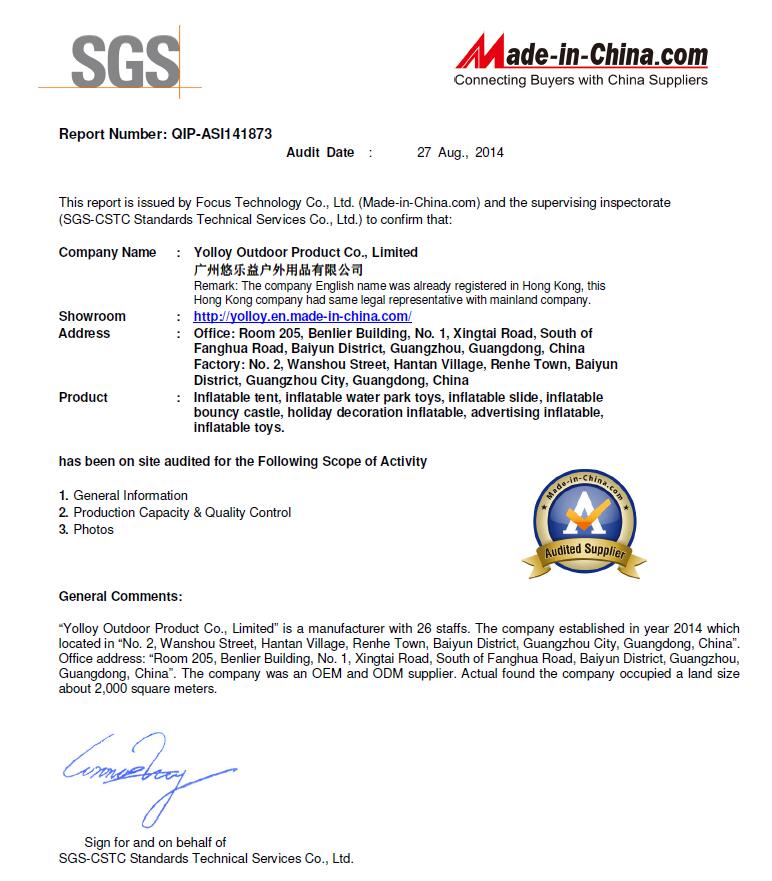
Relevant standards for inflatable structures include EN71 for toy safety, EN14960 for inflatable play equipment, and EN15649 for floating leisure articles. Blowers should carry CE or UL certification. These credentials are not just paperwork — they reflect a manufacturing process that has been independently audited and verified.
The Customization Advantage
One of the strongest arguments for sourcing from a dedicated
custom inflatable tent manufacturer rather than buying off-the-shelf products is the ability to tailor every aspect of the tent to your needs. Custom sizes and colors are the starting point. Beyond that, company logos and artwork can be printed directly onto the tent surface, turning the structure itself into a branding asset.
The design process at a capable manufacturer typically begins with a consultation. You provide a description, drawing, sketch, photograph, or even just a site plan and budget. The design team then creates simulation renderings so you can visualize the finished product before a single panel is cut. This iterative process continues until the design is approved, at which point it moves to production. The result is a tent that fits your space, matches your brand, and serves your operational needs — not a compromise that sort of works.
Production, Packaging, and Delivery
Understanding the production timeline helps with planning. A regular inflatable product typically takes 6 to 15 days to manufacture, not including transit time. Complex or oversized custom projects naturally take longer, and the manufacturer should communicate realistic timelines upfront rather than overpromising.
Packaging quality matters more than most buyers anticipate. Products should be wrapped in soft carpet protection, sealed in waterproof PVC bags, and covered with an outer PE film. Large products may ship on steel pallets for additional protection. Every inflatable product should include a repair kit as standard — a small detail that can save significant downtime if a puncture occurs during an event.
For shipping, buyers typically choose between air freight (5 to 7 days transit) and sea freight (15 to 30 days or more). A manufacturer exporting to Europe, Asia, South America, Africa, the Middle East, and Latin America should be familiar with the documentation requirements for each destination and able to supply appropriately rated blowers configured for the local voltage (110V, 220V, or 380V).
A Sourcing Partner, Not Just a Supplier
The relationship between a buyer and an inflatable tent manufacturer should extend well beyond the initial purchase. A supplier that answers emails within 24 hours, maintains a 95% on-time delivery rate, and stands behind a three-year expected service life gives you the confidence to plan events and operations without worrying about equipment failure.
The minimum order quantity is another important consideration. A manufacturer that accepts orders starting from a single piece signals flexibility and willingness to serve businesses of all sizes — from a startup event rental company testing a new market to an established resort chain expanding its glamping inventory.
Ready to Start Your Project?
When you find a manufacturer that combines custom design capabilities, certified materials, transparent production timelines, and responsive after-sales support, you have found more than a vendor. You have found a partner who can grow with your business. Whether you need one tent for a flagship event or a fleet of structures for a nationwide rollout, the right manufacturer makes the process seamless from initial concept to final delivery. The businesses that thrive in this space are those that take the time to evaluate suppliers on quality, not just price — because what you save on the front end often costs you far more in replacements, repairs, and missed opportunities down the road.