Products Category
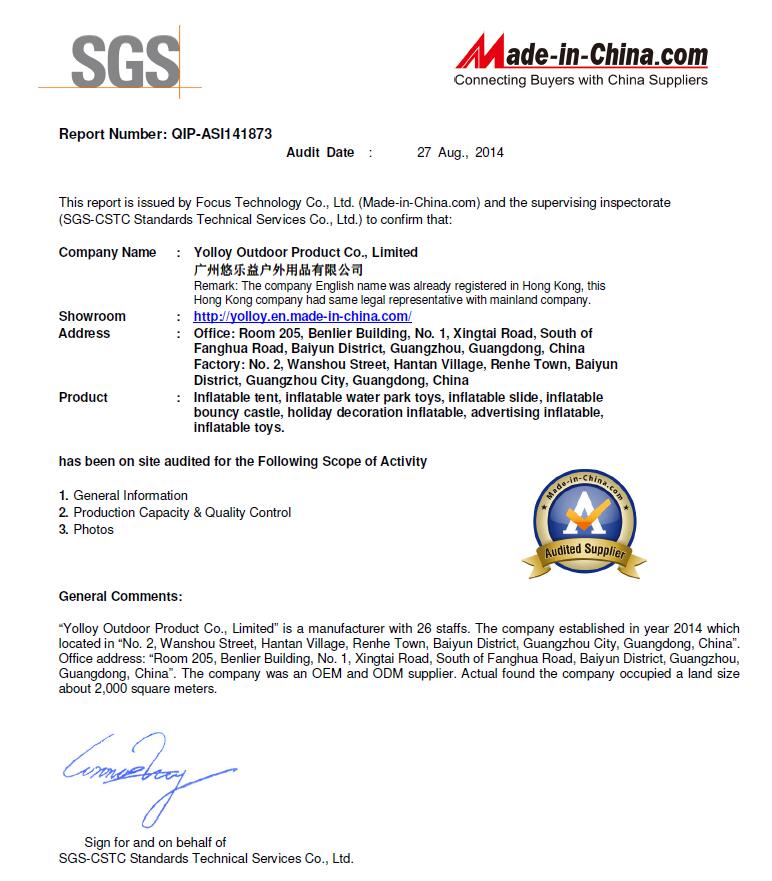
Certification

News

• New Order Successfully Finished for Long-Time Cooperated Japanese Client | YOLLOY Wins Full Client Recognition

• YOLLOY Custom Inflatable Pool Tent for Danish Client: Professional Pool Repair Shelter & Debris Protection

• Trusted Once Again! Greek Captain Re-orders Our Products After 4 Years

• Revolutionize Your Outdoors: The All-Terrain Inflatable Floating Tent for Land & Water

• Elevate Your Summer Fun: The Ultimate Inflatable Water Floating Volleyball Court Trampoline

• Innovative Inflatable Nightclub Tents & Pop-Up Bars: The Ultimate Solution for Portable Party Venues

Contact Us

Name: Sunny Yang
Tel: +86-20-8370 0771
Fax: +86-20-8370 0771
Mobile: 13570587575
E-mail: [email protected]
Add: No 5,Xiong wei Bo Nan Road,ZhongLuoTan Town,Baiyun district,Guangzhou,China
Friend me on Facebook Follow me on Twitter Add me to your circles Follow me on Pinterest Watch my channel on YouTube
News

How does an inflatable planetarium projection dome tent project images?

Author:yolloy Date:2026/8/14 7:35:10

An inflatable planetarium dome tent creates immersive 360-degree visuals by combining a precisely engineered projection surface with one or more digital projectors. The dome itself serves as both the venue and the screen — its curved interior acts as a seamless canvas onto which astronomical content, educational films, or branded environments are cast. Below, we break down exactly how the projection process works, from the dome material to the final image on the surface.

1. The Projection Surface: More Than Just a Wall

The inner surface of a portable planetarium dome is the single most critical component for image quality. Unlike a flat screen, a hemispherical surface curves away from the projector at every point except the center. This means the material must be engineered to reflect light evenly across the entire dome — from the zenith directly above the projector to the lower edges near the floor.

Most portable domes use commercial-grade PVC fabric with a matte white or silver reflective inner coating. This coating serves two purposes: it maximizes light bounce so that even moderate-brightness projectors can produce vivid images, and it scatters the light uniformly to eliminate hot spots — areas where brightness would otherwise pool and wash out nearby stars or graphics. The matte finish prevents glare, which is especially important when the dome is used in partially lit environments such as school gymnasiums or outdoor event spaces.

Seamless construction is equally important. Any visible seam or wrinkle on the inner surface can distort the projected image, turning crisp star fields into blurry streaks. High-quality inflatable planetarium dome tents use large welded PVC panels to create a near-seamless interior, with structural beams placed along the dome's meridians where they have minimal impact on the projection area.

2. Projector Configuration: Single vs. Multi-Projector Systems

The way a dome projects images depends heavily on how many projectors are used and where they are positioned. There are two primary configurations:

Single-Projector Fisheye Setup

In smaller domes — typically 4 to 8 meters in diameter — a single projector mounted at the dome's center points upward through a fisheye lens. The fisheye lens deliberately distorts the image into a circular frame, and when that distorted image hits the dome's curved surface, it "unfolds" into a correct spherical view. This is the simplest and most affordable configuration, making it ideal for schools, small museums, and community centers. Setup is fast: position the projector on a tripod at the center, align it to point straight up, adjust focus, and the dome is ready to display content.

Multi-Projector Full-Dome Systems

Larger domes — 10 meters and above — typically use two to six projectors positioned around the interior perimeter. Each projector covers a designated sector of the dome surface, and specialized software stitches the separate images together into one continuous, seamless panorama. Full-dome systems can display far more than static star fields: they support animated sequences such as planetary orbits, meteor showers, and deep-space fly-throughs, all rendered at high resolution without visible seams or gaps.

To align the projectors correctly, calibration software maps the exact curvature of the dome and adjusts each projector's output to compensate for geometric distortion. This ensures that every star appears in its astronomically correct position and that constellations look exactly as they do in the real night sky.

3. Image Warping and Edge Blending

The reason a flat projector lens can fill a curved dome without distortion comes down to two techniques: geometric warping and edge blending.

Geometric warping is a mathematical process that repositions every pixel before it leaves the projector. Because the dome surface curves away from the lens, a raw rectangular image would stretch and distort when projected onto a hemisphere. Warping pre-distorts the image in the opposite direction so that when it lands on the curved surface, it appears geometrically correct — circles stay circular, and straight lines of constellation guides remain straight from the viewer's perspective.

Edge blending becomes necessary when multiple projectors are used. Where two adjacent projector beams overlap, the combined brightness would normally create a visible bright seam. Edge blending feathers the brightness of each projector at the overlap zone — typically 10 to 20 percent of the frame width — so that the combined light output matches the brightness of a single projector elsewhere on the surface. When properly calibrated, the transition between projectors is completely invisible to the human eye.

4. The Inflatable Structure: Why Air Is the Ideal Frame

The inflatable design itself plays a direct role in projection quality. A sphere distributes internal air pressure evenly across its entire surface, creating a smooth, wrinkle-free projection canvas without the need for rigid frames, trusses, or structural steel. This is what makes portable planetarium domes practical for touring use — they can be deflated, folded into a carrying case, transported in a standard vehicle, and re-inflated at a new location in 10 to 30 minutes.

The continuous blower system maintains a low internal pressure of approximately 2 to 5 kPa — just enough to keep the fabric taut without stressing the seams. At this pressure level, the dome surface remains stable even when people move inside, and minor air leakage through zippered entry ports is continuously compensated. The dome's base skirt and anchoring system (stakes for grass, sandbags for hard surfaces) keep the entire structure grounded, preventing movement that could misalign the projection.

Key Point: The same air pressure that holds the dome upright also guarantees a consistently smooth projection surface — no wrinkles, no sagging, and no frame shadows interfering with the image.

5. Content Sources and Playback

The content that plays inside a dome is typically called fulldome content — video rendered in a circular fisheye format at 4K resolution or higher. Modern portable planetarium systems can play pre-rendered fulldome shows covering topics from the solar system to deep-space exploration, as well as real-time software such as Stellarium, which simulates the night sky for any date and location on Earth.

An inflatable projection screen inside the dome is not limited to astronomy, either. The same dome can display educational documentaries, corporate presentations, immersive branding environments, and even live camera feeds — making it a versatile tool for schools, event organizers, and businesses alike.

6. Practical Applications

The combination of portability and immersive projection makes these domes useful across a wide range of settings:

ApplicationHow the Dome Is Used
EducationSchools and museums bring astronomy lessons to life with 360-degree views of constellations, planetary orbits, and galaxy simulations.
Science Fairs & FestivalsEvent organizers use domes as pop-up planetariums, offering attendees an immersive stargazing experience between other activities.
Corporate EventsCompanies project branded environments, product launches, and data visualizations onto the dome interior for memorable presentations.
Outdoor CampingTransparent dome models let campers sleep under a real starry sky while protected from wind, rain, and insects.
Wellness & TherapyThe calming effect of a simulated night sky is used in hospitals and wellness centers for relaxation and mindfulness sessions.

7. Choosing the Right Dome for Your Projection Needs

When selecting an inflatable planetarium dome tent for projection purposes, several factors should guide your decision:

  • Dome size — Smaller domes (4–6 m) work well with a single projector and suit classroom groups; larger domes (10–15 m) need multi-projector setups but can accommodate 50 or more viewers.
  • Material quality — Look for commercial-grade PVC with a reflective inner coating and heat-sealed seams. Durable materials ensure the dome maintains its shape and projection surface quality through repeated use.
  • Blower specifications — A quiet, continuous-duty blower rated for the correct voltage (110V, 220V, or 380V) is essential. The blower should run quietly enough not to disrupt the immersive experience.
  • Portability — Check the packed size and weight. A good portable dome should fit into a carrying case that can be transported in a standard vehicle.
  • Customization options — Many manufacturers, including YOLLOY, offer custom sizes, colors, and branding. You can have your logo printed on the dome exterior or choose specific interior coatings for optimal projection quality.

A portable planetarium dome projects images through a carefully coordinated system: a reflective, seamless inner surface, precisely positioned projectors with fisheye lenses or multi-channel arrays, and calibration software that warps and blends the output into a single immersive image. The inflatable structure itself ensures a smooth, stable projection canvas while keeping the entire system lightweight and truly portable.

Whether you are an educator looking to inspire students, an event organizer seeking a memorable attraction, or a business wanting to create an immersive brand experience, an inflatable planetarium dome tent from a reliable manufacturer delivers projection quality that rivals fixed installations — at a fraction of the cost and with the freedom to set up anywhere. To learn more about custom dome options and technical specifications, visit YOLLOY Outdoor Product Co., Limited.


How does an inflatable planetarium projection dome tent project images?

Author:yolloy Date:2026/8/14 7:35:10

An inflatable planetarium dome tent creates immersive 360-degree visuals by combining a precisely engineered projection surface with one or more digital projectors. The dome itself serves as both the venue and the screen — its curved interior acts as a seamless canvas onto which astronomical content, educational films, or branded environments are cast. Below, we break down exactly how the projection process works, from the dome material to the final image on the surface.

1. The Projection Surface: More Than Just a Wall

The inner surface of a portable planetarium dome is the single most critical component for image quality. Unlike a flat screen, a hemispherical surface curves away from the projector at every point except the center. This means the material must be engineered to reflect light evenly across the entire dome — from the zenith directly above the projector to the lower edges near the floor.

Most portable domes use commercial-grade PVC fabric with a matte white or silver reflective inner coating. This coating serves two purposes: it maximizes light bounce so that even moderate-brightness projectors can produce vivid images, and it scatters the light uniformly to eliminate hot spots — areas where brightness would otherwise pool and wash out nearby stars or graphics. The matte finish prevents glare, which is especially important when the dome is used in partially lit environments such as school gymnasiums or outdoor event spaces.

Seamless construction is equally important. Any visible seam or wrinkle on the inner surface can distort the projected image, turning crisp star fields into blurry streaks. High-quality inflatable planetarium dome tents use large welded PVC panels to create a near-seamless interior, with structural beams placed along the dome's meridians where they have minimal impact on the projection area.

2. Projector Configuration: Single vs. Multi-Projector Systems

The way a dome projects images depends heavily on how many projectors are used and where they are positioned. There are two primary configurations:

Single-Projector Fisheye Setup

In smaller domes — typically 4 to 8 meters in diameter — a single projector mounted at the dome's center points upward through a fisheye lens. The fisheye lens deliberately distorts the image into a circular frame, and when that distorted image hits the dome's curved surface, it "unfolds" into a correct spherical view. This is the simplest and most affordable configuration, making it ideal for schools, small museums, and community centers. Setup is fast: position the projector on a tripod at the center, align it to point straight up, adjust focus, and the dome is ready to display content.

Multi-Projector Full-Dome Systems

Larger domes — 10 meters and above — typically use two to six projectors positioned around the interior perimeter. Each projector covers a designated sector of the dome surface, and specialized software stitches the separate images together into one continuous, seamless panorama. Full-dome systems can display far more than static star fields: they support animated sequences such as planetary orbits, meteor showers, and deep-space fly-throughs, all rendered at high resolution without visible seams or gaps.

To align the projectors correctly, calibration software maps the exact curvature of the dome and adjusts each projector's output to compensate for geometric distortion. This ensures that every star appears in its astronomically correct position and that constellations look exactly as they do in the real night sky.

3. Image Warping and Edge Blending

The reason a flat projector lens can fill a curved dome without distortion comes down to two techniques: geometric warping and edge blending.

Geometric warping is a mathematical process that repositions every pixel before it leaves the projector. Because the dome surface curves away from the lens, a raw rectangular image would stretch and distort when projected onto a hemisphere. Warping pre-distorts the image in the opposite direction so that when it lands on the curved surface, it appears geometrically correct — circles stay circular, and straight lines of constellation guides remain straight from the viewer's perspective.

Edge blending becomes necessary when multiple projectors are used. Where two adjacent projector beams overlap, the combined brightness would normally create a visible bright seam. Edge blending feathers the brightness of each projector at the overlap zone — typically 10 to 20 percent of the frame width — so that the combined light output matches the brightness of a single projector elsewhere on the surface. When properly calibrated, the transition between projectors is completely invisible to the human eye.

4. The Inflatable Structure: Why Air Is the Ideal Frame

The inflatable design itself plays a direct role in projection quality. A sphere distributes internal air pressure evenly across its entire surface, creating a smooth, wrinkle-free projection canvas without the need for rigid frames, trusses, or structural steel. This is what makes portable planetarium domes practical for touring use — they can be deflated, folded into a carrying case, transported in a standard vehicle, and re-inflated at a new location in 10 to 30 minutes.

The continuous blower system maintains a low internal pressure of approximately 2 to 5 kPa — just enough to keep the fabric taut without stressing the seams. At this pressure level, the dome surface remains stable even when people move inside, and minor air leakage through zippered entry ports is continuously compensated. The dome's base skirt and anchoring system (stakes for grass, sandbags for hard surfaces) keep the entire structure grounded, preventing movement that could misalign the projection.

Key Point: The same air pressure that holds the dome upright also guarantees a consistently smooth projection surface — no wrinkles, no sagging, and no frame shadows interfering with the image.

5. Content Sources and Playback

The content that plays inside a dome is typically called fulldome content — video rendered in a circular fisheye format at 4K resolution or higher. Modern portable planetarium systems can play pre-rendered fulldome shows covering topics from the solar system to deep-space exploration, as well as real-time software such as Stellarium, which simulates the night sky for any date and location on Earth.

An inflatable projection screen inside the dome is not limited to astronomy, either. The same dome can display educational documentaries, corporate presentations, immersive branding environments, and even live camera feeds — making it a versatile tool for schools, event organizers, and businesses alike.

6. Practical Applications

The combination of portability and immersive projection makes these domes useful across a wide range of settings:

ApplicationHow the Dome Is Used
EducationSchools and museums bring astronomy lessons to life with 360-degree views of constellations, planetary orbits, and galaxy simulations.
Science Fairs & FestivalsEvent organizers use domes as pop-up planetariums, offering attendees an immersive stargazing experience between other activities.
Corporate EventsCompanies project branded environments, product launches, and data visualizations onto the dome interior for memorable presentations.
Outdoor CampingTransparent dome models let campers sleep under a real starry sky while protected from wind, rain, and insects.
Wellness & TherapyThe calming effect of a simulated night sky is used in hospitals and wellness centers for relaxation and mindfulness sessions.

7. Choosing the Right Dome for Your Projection Needs

When selecting an inflatable planetarium dome tent for projection purposes, several factors should guide your decision:

  • Dome size — Smaller domes (4–6 m) work well with a single projector and suit classroom groups; larger domes (10–15 m) need multi-projector setups but can accommodate 50 or more viewers.
  • Material quality — Look for commercial-grade PVC with a reflective inner coating and heat-sealed seams. Durable materials ensure the dome maintains its shape and projection surface quality through repeated use.
  • Blower specifications — A quiet, continuous-duty blower rated for the correct voltage (110V, 220V, or 380V) is essential. The blower should run quietly enough not to disrupt the immersive experience.
  • Portability — Check the packed size and weight. A good portable dome should fit into a carrying case that can be transported in a standard vehicle.
  • Customization options — Many manufacturers, including YOLLOY, offer custom sizes, colors, and branding. You can have your logo printed on the dome exterior or choose specific interior coatings for optimal projection quality.

A portable planetarium dome projects images through a carefully coordinated system: a reflective, seamless inner surface, precisely positioned projectors with fisheye lenses or multi-channel arrays, and calibration software that warps and blends the output into a single immersive image. The inflatable structure itself ensures a smooth, stable projection canvas while keeping the entire system lightweight and truly portable.

Whether you are an educator looking to inspire students, an event organizer seeking a memorable attraction, or a business wanting to create an immersive brand experience, an inflatable planetarium dome tent from a reliable manufacturer delivers projection quality that rivals fixed installations — at a fraction of the cost and with the freedom to set up anywhere. To learn more about custom dome options and technical specifications, visit YOLLOY Outdoor Product Co., Limited.