Products Category
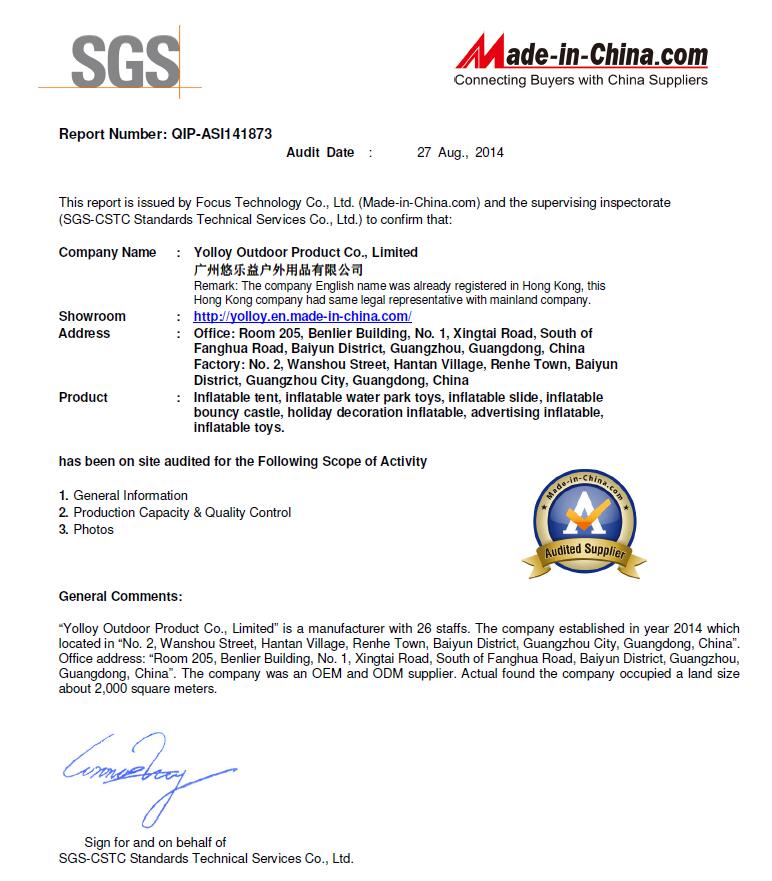
Certification

News

• New Order Successfully Finished for Long-Time Cooperated Japanese Client | YOLLOY Wins Full Client Recognition

• YOLLOY Custom Inflatable Pool Tent for Danish Client: Professional Pool Repair Shelter & Debris Protection

• Trusted Once Again! Greek Captain Re-orders Our Products After 4 Years

• Revolutionize Your Outdoors: The All-Terrain Inflatable Floating Tent for Land & Water

• Elevate Your Summer Fun: The Ultimate Inflatable Water Floating Volleyball Court Trampoline

• Innovative Inflatable Nightclub Tents & Pop-Up Bars: The Ultimate Solution for Portable Party Venues

Contact Us

Name: Sunny Yang
Tel: +86-20-8370 0771
Fax: +86-20-8370 0771
Mobile: 13570587575
E-mail: [email protected]
Add: No 5,Xiong wei Bo Nan Road,ZhongLuoTan Town,Baiyun district,Guangzhou,China
Friend me on Facebook Follow me on Twitter Add me to your circles Follow me on Pinterest Watch my channel on YouTube
News

How do I choose the best buy inflatable obstacle course for my family?

Author:yolloy Date:2026/8/14 9:45:20

An inflatable obstacle course is one of the best investments a family can make for outdoor fun. Unlike a standard bounce house that keeps kids entertained for a few minutes, a well-designed obstacle course brings competition, physical challenge, and that "one more time" energy that keeps children and adults coming back weekend after weekend. But with so many options on the market, how do you pick the right one for your family? This guide walks you through every factor that matters — from sizing and materials to safety and customization — so you can make a confident decision.

1. Start with Your Family's Needs

Before you look at any product, take a moment to think about who will actually use the course. A family with two toddlers has very different requirements from one with four pre-teens who want to race each other.

Age range matters. Compact home-use courses with low-profile obstacles (1–2 meters tall) work well for children aged 3 to 8. These typically feature soft tunnels, low barriers, and gentle slides. Larger commercial-grade courses, standing 3 meters or taller, are better suited for kids aged 6 to 14 and include climbing walls, balance beams, and steep slides that keep older children engaged.

Number of kids. If you have two or more children — or you regularly host neighborhood gatherings — look for a course that can accommodate multiple users simultaneously. A single-lane course means one person runs at a time while everyone else waits. A dual-lane design lets two kids race head-to-head and keeps the line moving.

How often will it be used? A course that gets set up every weekend throughout the summer needs to be built differently than one that only comes out for a birthday party once a year. Be honest about your expected usage frequency when deciding on build quality.

2. Size and Space Requirements

Length is the single most important specification on an obstacle course — and the one most commonly underestimated. A 15-foot course is over in about 12 seconds. A 30-foot course takes 45 seconds to a minute for most kids. That difference transforms the experience from a quick novelty into a genuine challenge that kids want to run again and again.

As a general rule, anything shorter than 20 feet won't deliver a satisfying experience for regular family use. For parties or larger groups, aim for 25 to 30 feet or more.

But length is only half the equation. You also need to measure your available space. Factor in at least 3 to 5 feet of clearance on all sides for safe setup and operation. A 30-foot course needs around 35 to 38 feet of flat, clear ground. Double-check the width as well — dual-lane courses are wider and may need 14 feet or more of lateral space.

Quick Tip: Before you buy, go outside with a measuring tape and mark out the footprint. It's far better to discover a space issue before delivery than during setup.

3. Material Quality and Construction

The materials used in an inflatable obstacle course directly determine how long it lasts and how safe it is. Obstacle courses take more abuse than standard bounce houses because kids are crawling through tunnels, climbing walls, and sliding down exits — all of which create concentrated wear on specific areas.

Commercial-Grade PVC Tarpaulin

The gold standard is heavy-duty PVC tarpaulin. This material is puncture-resistant, waterproof, and UV-stabilized for outdoor use. It holds up to repeated inflation and deflation cycles without degrading. Look for courses that use commercial-grade PVC in high-stress zones such as climbing walls, tunnel floors, and slide exits.

Oxford Fabric Reinforcement

For residential-grade courses, 420D or 600D Oxford fabric with PVC coating offers a good balance of durability and weight. It's lighter than full commercial PVC, making it easier to set up and pack away, but still provides adequate tear resistance for regular family use.

Seam Construction

Pay attention to how the seams are built. Double-stitched or quadruple-stitched seams with waterproof nylon thread are non-negotiable. High-temperature fusion welding is another mark of quality, especially for airtight sections. Reinforced stitching at load-bearing points — such as anchor D-rings and climbing wall attachments — prevents the most common failure points.

4. Safety Features to Look For

Safety should never be compromised. Here are the features every family should verify before purchasing:

  • Enclosed mesh walls. Full netting on both sides prevents kids from falling out while allowing parents to see inside and monitor activity from any angle.
  • Adequate anchoring. A course should come with heavy-duty metal stakes or D-ring anchor points. On windy days, supplement with sandbags for extra stability.
  • Weight capacity labels. Look for clearly stated maximum weight limits per user (typically 50–80 kg for commercial courses) and total concurrent capacity. This prevents overcrowding and structural stress.
  • Non-slip surfaces. Climbing sections and slide entry points should have textured, slip-resistant surfaces.
  • Rounded edges and padded zones. Impact-absorbing padding at landing areas and rounded corners on hard structural elements reduce injury risk.
  • Certification compliance. Products that meet EN14960 or EN71 standards have passed independent testing for inflatable play equipment safety.

5. Single-Lane vs. Dual-Lane Design

This is one of the most consequential decisions you'll make, and it comes down to a simple question: how many kids will use the course at once?

A single-lane course lets one person run at a time. It's a solid choice if you have a tight backyard footprint or if your children are younger and don't need the competitive element. Single-lane courses are narrower, lighter, and generally more affordable.

A dual-lane course enables two racers to go head-to-head simultaneously. The energy level is completely different — louder, more exciting, and more engaging. The line moves twice as fast, which makes a big difference when you're hosting a party with ten or more kids. If you have the space for the extra width, dual-lane is almost always the better long-term choice.

6. Customization and Working with a Manufacturer

One of the biggest advantages of buying directly from an inflatable obstacle course manufacturer is the ability to customize your order. Unlike off-the-shelf retail products, a factory-direct course can be tailored to your exact specifications.

Working with a professional inflatable obstacle course supplier like YOLLOY opens up possibilities that retail channels simply can't offer:

  • Custom sizes and colors. Need a course that fits a specific space or matches your event theme? A manufacturer can adjust dimensions and color schemes to your requirements.
  • Logo and branding. Your family name, a favorite sports team logo, or custom artwork can be printed directly onto the course surface.
  • Obstacle configuration. Choose the specific obstacles you want — climbing walls, crawl tunnels, pop-up barriers, balance beams, and slides — and arrange them in the order that makes sense for your users.
  • Design from scratch. If you have a sketch, a photo of something you like, or even just a verbal description, a skilled design team can turn it into a production-ready rendering for your approval before manufacturing begins.
  • Voltage-specific blowers. If you're in a region with 110V, 220V, or 380V power, the blower can be supplied to match your local electrical standard.

The typical production time for a custom inflatable product is 6 to 15 days, and many manufacturers accept minimum orders of just one piece. This means you can get a one-of-a-kind course without committing to a bulk purchase.

7. What Should Be Included in Your Purchase

Before you finalize any order, check what comes in the box. Some courses are sold "inflatable only," meaning you need to buy the blower separately. Here's what a complete package should include:

  • Continuous-duty blower. The blower should be appropriately powered for the course size, with thermal overload protection and compatibility with your local voltage. CE or UL certification is a good indicator of quality.
  • Ground stakes and anchors. At least 8 heavy-duty metal stakes with D-ring attachment points. More is better for larger courses.
  • Repair kit. A basic kit with vinyl patches and adhesive lets you fix small punctures without downtime.
  • Storage bag. A durable bag with handles makes packing up and storing the course significantly easier — these units can weigh anywhere from 45 kg to over 200 kg.
  • Setup and safety instructions. Clear documentation on proper inflation, anchoring, and safe usage guidelines.

8. Budget and Value Considerations

Price matters, but the cheapest option is rarely the best value. A course that falls apart after one season or fails to engage your kids is a waste of money regardless of how little you paid for it.

Residential-grade courses offer a lower entry price but use lighter materials and may have shorter warranties. They're appropriate for occasional use — a few times per season — with younger children. Commercial-grade courses cost more upfront but are built with industrial-strength PVC, reinforced stitching, and higher weight capacities that make them suitable for regular use with older kids and even adults.

When evaluating price, consider the cost per use. A course that costs more but gets set up every weekend for three years delivers far better value than a cheaper unit that sits in storage because it's too small or too fragile. Also factor in the warranty — a 2- to 3-year warranty against manufacturing defects signals the manufacturer's confidence in their product.

9. Final Checklist Before You Buy

Here's a quick summary of everything to verify before making your purchase:

  • Measured your available space with proper clearance on all sides
  • Confirmed the course length is at least 20 feet for regular family use
  • Checked that the obstacle types match your children's ages and skill levels
  • Verified the materials — PVC tarpaulin with Oxford reinforcement at minimum
  • Confirmed the course includes a blower, stakes, repair kit, and storage bag
  • Checked that safety certifications (EN14960, EN71) are in place
  • Decided between single-lane and dual-lane based on your family size
  • Reviewed the warranty terms and after-sales support policy
  • Considered whether custom sizing or branding would add value for your family

10. Making the Right Choice for Your Family

Choosing the right inflatable obstacle course comes down to matching the product to your family's specific situation. Take the time to measure your space, think about who will use the course and how often, and prioritize build quality over the lowest price tag. A well-made course from an experienced manufacturer will provide years of active outdoor entertainment — and the kind of memories that keep families gathering in the backyard season after season.

If you're ready to explore your options or want to discuss a custom design, reach out to a professional supplier who can walk you through the possibilities and help you create exactly what your family needs.


How do I choose the best buy inflatable obstacle course for my family?

Author:yolloy Date:2026/8/14 9:45:20

An inflatable obstacle course is one of the best investments a family can make for outdoor fun. Unlike a standard bounce house that keeps kids entertained for a few minutes, a well-designed obstacle course brings competition, physical challenge, and that "one more time" energy that keeps children and adults coming back weekend after weekend. But with so many options on the market, how do you pick the right one for your family? This guide walks you through every factor that matters — from sizing and materials to safety and customization — so you can make a confident decision.

1. Start with Your Family's Needs

Before you look at any product, take a moment to think about who will actually use the course. A family with two toddlers has very different requirements from one with four pre-teens who want to race each other.

Age range matters. Compact home-use courses with low-profile obstacles (1–2 meters tall) work well for children aged 3 to 8. These typically feature soft tunnels, low barriers, and gentle slides. Larger commercial-grade courses, standing 3 meters or taller, are better suited for kids aged 6 to 14 and include climbing walls, balance beams, and steep slides that keep older children engaged.

Number of kids. If you have two or more children — or you regularly host neighborhood gatherings — look for a course that can accommodate multiple users simultaneously. A single-lane course means one person runs at a time while everyone else waits. A dual-lane design lets two kids race head-to-head and keeps the line moving.

How often will it be used? A course that gets set up every weekend throughout the summer needs to be built differently than one that only comes out for a birthday party once a year. Be honest about your expected usage frequency when deciding on build quality.

2. Size and Space Requirements

Length is the single most important specification on an obstacle course — and the one most commonly underestimated. A 15-foot course is over in about 12 seconds. A 30-foot course takes 45 seconds to a minute for most kids. That difference transforms the experience from a quick novelty into a genuine challenge that kids want to run again and again.

As a general rule, anything shorter than 20 feet won't deliver a satisfying experience for regular family use. For parties or larger groups, aim for 25 to 30 feet or more.

But length is only half the equation. You also need to measure your available space. Factor in at least 3 to 5 feet of clearance on all sides for safe setup and operation. A 30-foot course needs around 35 to 38 feet of flat, clear ground. Double-check the width as well — dual-lane courses are wider and may need 14 feet or more of lateral space.

Quick Tip: Before you buy, go outside with a measuring tape and mark out the footprint. It's far better to discover a space issue before delivery than during setup.

3. Material Quality and Construction

The materials used in an inflatable obstacle course directly determine how long it lasts and how safe it is. Obstacle courses take more abuse than standard bounce houses because kids are crawling through tunnels, climbing walls, and sliding down exits — all of which create concentrated wear on specific areas.

Commercial-Grade PVC Tarpaulin

The gold standard is heavy-duty PVC tarpaulin. This material is puncture-resistant, waterproof, and UV-stabilized for outdoor use. It holds up to repeated inflation and deflation cycles without degrading. Look for courses that use commercial-grade PVC in high-stress zones such as climbing walls, tunnel floors, and slide exits.

Oxford Fabric Reinforcement

For residential-grade courses, 420D or 600D Oxford fabric with PVC coating offers a good balance of durability and weight. It's lighter than full commercial PVC, making it easier to set up and pack away, but still provides adequate tear resistance for regular family use.

Seam Construction

Pay attention to how the seams are built. Double-stitched or quadruple-stitched seams with waterproof nylon thread are non-negotiable. High-temperature fusion welding is another mark of quality, especially for airtight sections. Reinforced stitching at load-bearing points — such as anchor D-rings and climbing wall attachments — prevents the most common failure points.

4. Safety Features to Look For

Safety should never be compromised. Here are the features every family should verify before purchasing:

  • Enclosed mesh walls. Full netting on both sides prevents kids from falling out while allowing parents to see inside and monitor activity from any angle.
  • Adequate anchoring. A course should come with heavy-duty metal stakes or D-ring anchor points. On windy days, supplement with sandbags for extra stability.
  • Weight capacity labels. Look for clearly stated maximum weight limits per user (typically 50–80 kg for commercial courses) and total concurrent capacity. This prevents overcrowding and structural stress.
  • Non-slip surfaces. Climbing sections and slide entry points should have textured, slip-resistant surfaces.
  • Rounded edges and padded zones. Impact-absorbing padding at landing areas and rounded corners on hard structural elements reduce injury risk.
  • Certification compliance. Products that meet EN14960 or EN71 standards have passed independent testing for inflatable play equipment safety.

5. Single-Lane vs. Dual-Lane Design

This is one of the most consequential decisions you'll make, and it comes down to a simple question: how many kids will use the course at once?

A single-lane course lets one person run at a time. It's a solid choice if you have a tight backyard footprint or if your children are younger and don't need the competitive element. Single-lane courses are narrower, lighter, and generally more affordable.

A dual-lane course enables two racers to go head-to-head simultaneously. The energy level is completely different — louder, more exciting, and more engaging. The line moves twice as fast, which makes a big difference when you're hosting a party with ten or more kids. If you have the space for the extra width, dual-lane is almost always the better long-term choice.

6. Customization and Working with a Manufacturer

One of the biggest advantages of buying directly from an inflatable obstacle course manufacturer is the ability to customize your order. Unlike off-the-shelf retail products, a factory-direct course can be tailored to your exact specifications.

Working with a professional inflatable obstacle course supplier like YOLLOY opens up possibilities that retail channels simply can't offer:

  • Custom sizes and colors. Need a course that fits a specific space or matches your event theme? A manufacturer can adjust dimensions and color schemes to your requirements.
  • Logo and branding. Your family name, a favorite sports team logo, or custom artwork can be printed directly onto the course surface.
  • Obstacle configuration. Choose the specific obstacles you want — climbing walls, crawl tunnels, pop-up barriers, balance beams, and slides — and arrange them in the order that makes sense for your users.
  • Design from scratch. If you have a sketch, a photo of something you like, or even just a verbal description, a skilled design team can turn it into a production-ready rendering for your approval before manufacturing begins.
  • Voltage-specific blowers. If you're in a region with 110V, 220V, or 380V power, the blower can be supplied to match your local electrical standard.

The typical production time for a custom inflatable product is 6 to 15 days, and many manufacturers accept minimum orders of just one piece. This means you can get a one-of-a-kind course without committing to a bulk purchase.

7. What Should Be Included in Your Purchase

Before you finalize any order, check what comes in the box. Some courses are sold "inflatable only," meaning you need to buy the blower separately. Here's what a complete package should include:

  • Continuous-duty blower. The blower should be appropriately powered for the course size, with thermal overload protection and compatibility with your local voltage. CE or UL certification is a good indicator of quality.
  • Ground stakes and anchors. At least 8 heavy-duty metal stakes with D-ring attachment points. More is better for larger courses.
  • Repair kit. A basic kit with vinyl patches and adhesive lets you fix small punctures without downtime.
  • Storage bag. A durable bag with handles makes packing up and storing the course significantly easier — these units can weigh anywhere from 45 kg to over 200 kg.
  • Setup and safety instructions. Clear documentation on proper inflation, anchoring, and safe usage guidelines.

8. Budget and Value Considerations

Price matters, but the cheapest option is rarely the best value. A course that falls apart after one season or fails to engage your kids is a waste of money regardless of how little you paid for it.

Residential-grade courses offer a lower entry price but use lighter materials and may have shorter warranties. They're appropriate for occasional use — a few times per season — with younger children. Commercial-grade courses cost more upfront but are built with industrial-strength PVC, reinforced stitching, and higher weight capacities that make them suitable for regular use with older kids and even adults.

When evaluating price, consider the cost per use. A course that costs more but gets set up every weekend for three years delivers far better value than a cheaper unit that sits in storage because it's too small or too fragile. Also factor in the warranty — a 2- to 3-year warranty against manufacturing defects signals the manufacturer's confidence in their product.

9. Final Checklist Before You Buy

Here's a quick summary of everything to verify before making your purchase:

  • Measured your available space with proper clearance on all sides
  • Confirmed the course length is at least 20 feet for regular family use
  • Checked that the obstacle types match your children's ages and skill levels
  • Verified the materials — PVC tarpaulin with Oxford reinforcement at minimum
  • Confirmed the course includes a blower, stakes, repair kit, and storage bag
  • Checked that safety certifications (EN14960, EN71) are in place
  • Decided between single-lane and dual-lane based on your family size
  • Reviewed the warranty terms and after-sales support policy
  • Considered whether custom sizing or branding would add value for your family

10. Making the Right Choice for Your Family

Choosing the right inflatable obstacle course comes down to matching the product to your family's specific situation. Take the time to measure your space, think about who will use the course and how often, and prioritize build quality over the lowest price tag. A well-made course from an experienced manufacturer will provide years of active outdoor entertainment — and the kind of memories that keep families gathering in the backyard season after season.

If you're ready to explore your options or want to discuss a custom design, reach out to a professional supplier who can walk you through the possibilities and help you create exactly what your family needs.