Let's face it: when you think of military training, the first images that pop into your head are usually rugged, muddy fields filled with wooden walls, barbed wire, and heavy metal structures. For decades, this has been the standard. It's tough, it's grueling, and it gets the job done. But as times change and training methodologies evolve, so do the tools we use to prepare our forces. Enter the world of the
heavy-duty adult inflatable obstacle course
. Now, before you dismiss the idea of inflatables as just bouncy castles for kids' birthday parties, let's take a serious look at how modern engineering has transformed these structures into rigorous, military-grade training arenas.
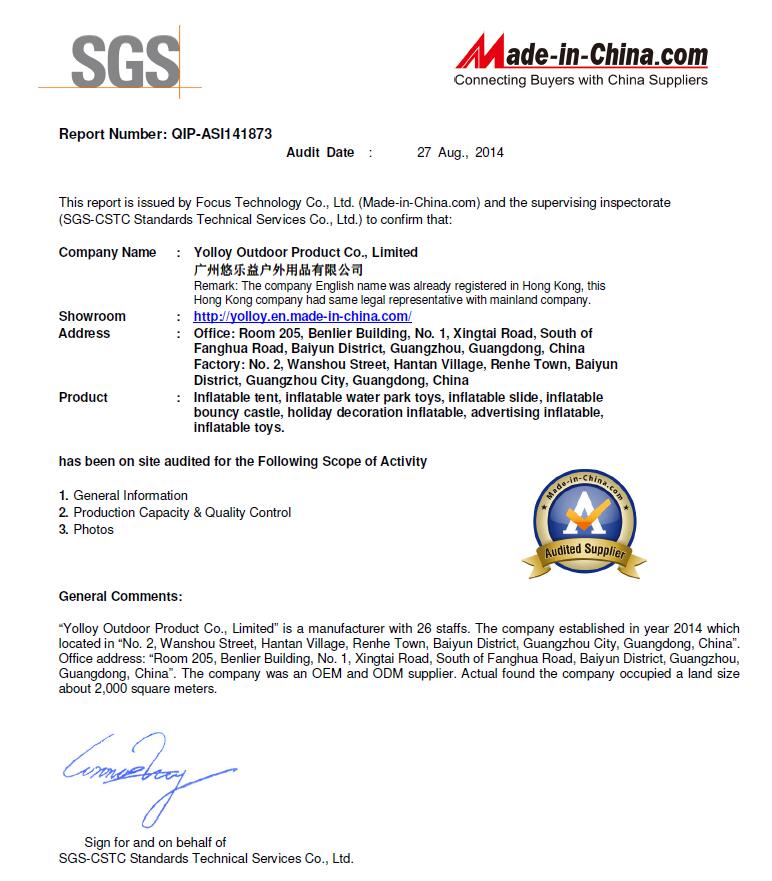
At Yolloy, we have dedicated ourselves to changing the narrative around inflatable structures. We believe that providing customers with professional and qualified products isn't just a slogan; it's a commitment to pushing the boundaries of what inflatables can achieve. Today, we are seeing a massive shift in how tactical teams, boot camps, and even elite athletic facilities approach functional fitness and endurance training. The demand for flexible, safe, yet incredibly challenging environments has never been higher, and our heavy-duty inflatable obstacle courses are stepping up to the plate.
The Evolution of the Obstacle Course
Historically, building an obstacle course was a massive undertaking. It required a permanent plot of land, heavy machinery to dig trenches and erect massive wooden frames, and constant maintenance to ensure that splintering wood or rusting metal didn't cause unnecessary injuries. While these traditional courses are fantastic for building grit, they lack one crucial element: adaptability.
Imagine you are running a temporary training camp, or perhaps you need to set up a rigorous physical evaluation in an indoor arena during harsh winter months. You simply can't uproot a wooden obstacle course and move it. This is where the brilliance of an inflatable tent or structure concept comes into play, scaled up and toughened for extreme physical exertion. A heavy-duty
inflatable obstacle course provides the exact same physical challenges—climbing, crawling, jumping, balancing, and swinging—but with unprecedented mobility and enhanced safety features.
"Transitioning to heavy-duty inflatables doesn't mean softening the training; it means optimizing it. You get maximum physical output with a significantly reduced risk of structural-related injuries."
Why Choose Inflatables for Adult and Military Training?
You might be wondering, "Can an inflatable really withstand the abuse of dozens of fully grown, heavily geared adults running across it?" The short answer is yes. But let's dive deeper into why organizations are increasingly making the switch to these innovative setups.
-
Uncompromising Safety Profile:
In high-intensity training, injuries are a constant threat. A slip on a wet wooden beam can mean a broken bone or a severe concussion. Inflatable courses inherently absorb shock. If a trainee misses a jump or falls from a climbing wall, they land on a forgiving, highly pressurized air cushion. This allows trainees to push themselves to their absolute physical limits without the constant psychological barrier of catastrophic injury.
-
Rapid Deployment and Portability:
A military unit needs to be agile. Our inflatable courses can be transported in the back of a standard truck and set up in a matter of hours using high-powered industrial blowers. When the training module is over, it deflates, rolls up, and goes into storage. This is perfect for touring training regimens, recruitment drives, or multi-purpose facilities.
-
Endless Modularity:
Traditional courses are static. Once you learn the route, muscle memory takes over, and the cognitive challenge drops. With our inflatable modules, you can rearrange the course daily. Connect a climbing wall to a tunnel maze on Monday, and switch it to a balancing beam challenge on Tuesday. The element of surprise keeps trainees on their toes.
-
Weather Resistance:
Traditional setups degrade fast under heavy rain, snow, or intense UV exposure. Our products are built to withstand the elements, much like our specialized water sports platforms, ensuring year-round usability regardless of the environment.
The Yolloy Standard: Engineered for Extremes
When we say "heavy-duty," we mean it. The materials and construction techniques used in our military-grade obstacle courses are miles apart from commercial recreational inflatables. At Yolloy, we understand that lives and operational readiness are on the line, which is why our manufacturing process is heavily scrutinized and strictly regulated.
The core of our heavy-duty courses is the material. We exclusively use premium
waterproof and fireproof PVC tarpaulin
. This isn't your standard plastic; it is a multi-layered, reinforced fabric that complies entirely with EN71 safety standards. The PVC tarpaulin is incredibly resistant to tearing, puncturing, and abrasion. This means that even if a trainee is wearing combat boots and tactical gear, the course will hold up to the friction and impact.
Furthermore, we employ state-of-the-art double and quadruple stitching techniques at all high-stress points. Seams are the most vulnerable part of any inflatable structure. To combat this, we reinforce every joint and use heat-welding technology where appropriate to ensure an airtight, rock-solid seal. The air pressure is maintained flawlessly, providing a firm, stable surface that feels surprisingly grounded to run and jump on.
|
Feature / Specification
|
Traditional Wooden/Metal Course
|
Yolloy Heavy-Duty Inflatable Course
|
|
Material Base
|
Wood, Steel, Concrete, Rope
|
Reinforced, Fireproof PVC Tarpaulin
|
|
Setup Time
|
Weeks to Months (Permanent)
|
1 to 3 Hours (Depending on size)
|
|
Injury Risk (Impact)
|
High (Hard surfaces, splinters, sharp edges)
|
Low (Shock-absorbing surfaces)
|
|
Customizability
|
Static, very difficult to alter
|
Highly modular, easily rearranged
|
|
Maintenance
|
High (Rust treatment, wood replacement)
|
Low (Simple cleaning and basic patching if ever needed)
|
Anatomy of a Military-Grade Inflatable Course
So, what exactly does one of these colossal structures look like? Let's walk through a typical setup designed for adult and military use. A full-scale course is usually broken down into several interconnected modules.
1. The Barricade Climb:
The course often starts with a massive, nearly vertical wall. Trainees must use upper body strength and teamwork to scale the 15-foot high structure. Unlike wooden walls that offer rigid footholds, the inflatable wall requires superior core stability to maintain grip on the slightly yielding surface.
2. The Tire Run Simulation:
Instead of heavy rubber tires that can easily twist an ankle, the inflatable version features alternating inflated rings. Trainees must high-step through them at top speed. The bounce factor makes it significantly harder to maintain balance, turning a standard cardio drill into an intense stabilizing workout.
3. The Low Crawl Tunnels:
Claustrophobia and speed are tested here. Long, dark, and narrow inflatable tunnels force trainees to leopard-crawl through tight spaces. Because the material is flexible, instructors can safely apply external pressure or add weighted bags on top of the tunnels to simulate collapsing debris or extreme confined spaces.
4. The Leap of Faith:
A high platform requires a bold jump onto a lower, oversized airbag. This tests a trainee's courage and commitment while ensuring a completely safe landing, removing the hesitation that often accompanies heights training.
Custom Design: Tailored to Your Mission
One size does not fit all, especially when it comes to specialized training. A marine boot camp has different requirements than a metropolitan SWAT team or an elite civilian fitness academy. This is where Yolloy's true strength shines. We are incredibly proud of our
custom design
capabilities.
Our process is highly collaborative. When you approach us with an idea, our dedicated design team gets to work. Within a 24-hour response window, we begin charting out your vision. We don't just sketch things on a napkin; we generate highly detailed 3D simulated renderings of the proposed obstacle course. You can see exactly how the modules fit together, check the dimensions against your available space, and even customize the color scheme to match your unit's or organization's branding.
We iterate on these designs until you are 100% satisfied. Need higher walls? We can do that. Need a specific width for the tunnels to accommodate tactical backpacks? Not a problem. We will modify the simulation until it perfectly aligns with your training objectives before a single piece of PVC is cut. And with our stellar track record of a 95% on-time delivery rate, you can plan your training schedules with absolute confidence.
Beyond the Military: Expanding the Horizon
While the term "military-grade" implies usage by armed forces, the application of these heavy-duty inflatable obstacle courses extends far beyond the barracks.
Law Enforcement Academies:
Police forces are integrating these courses to simulate foot chases through urban environments. The ability to climb over fences, dive through windows, and navigate unpredictable terrain is crucial, and our inflatables provide a safe, repeatable way to practice these skills.
Extreme Fitness and OCR (Obstacle Course Racing):
The boom in civilian obstacle racing (like Tough Mudder or Spartan races) has created a huge demand for training facilities. Gyms are purchasing modular inflatable setups to offer their members a taste of the race day experience indoors, without the mud, but with all the sweat and exertion.
Corporate Team Building:
Forget trust falls. Companies looking for impactful leadership and teamwork exercises are renting or buying large inflatable courses. Navigating a physically demanding but inherently safe course requires communication, strategy, and mutual support—the exact skills needed in a boardroom.
Maintaining Your Heavy-Duty Inflatable
Investing in a massive training structure means you want it to last. Fortunately, maintaining Yolloy's PVC-based inflatables is straightforward. Unlike traditional courses that require power tools and heavy labor to fix, our courses are relatively low-maintenance.
After a rigorous training session, especially if used outdoors, simply hosing down the surface with mild soap and water removes dirt and sweat. Because the material is waterproof, it dries quickly. Before packing it away, ensuring it is completely dry prevents any mildew build-up. In the rare event of a puncture from an unusually sharp object, our products come with heavy-duty repair kits. A simple patch and specialized adhesive can fix a tear in minutes, curing to become as strong as the original material, minimizing downtime.
Looking to the Future of Physical Training
As we move forward, the intersection of safety, efficiency, and intense physical challenge will continue to favor innovative solutions over archaic methods. Yolloy is constantly researching new materials, refining our manufacturing processes, and expanding our product lines. From introducing space-saving designs to engineering structures capable of withstanding extreme snow loads, our commitment to innovation never rests.
Choosing a Heavy-Duty
Adult Inflatable Obstacle Course for military or elite training is no longer an alternative; it is rapidly becoming the standard. It offers an unparalleled combination of brutal physical demands with a safety net that traditional setups simply cannot match. It respects the physical limits of the human body while simultaneously pushing them further.
Absolutely. Our heavy-duty courses are constructed using commercial-grade, reinforced PVC tarpaulin. Combined with high-capacity continuous airflow blowers, the internal pressure creates a highly rigid and stable surface capable of supporting thousands of pounds simultaneously without sagging or deflating.
2. How long does it take to set up and take down?
Despite their massive size, setup is incredibly fast. Depending on the complexity and number of modules, a typical military-grade course can be unrolled, connected, and fully inflated in 1 to 3 hours with a small team. Deflation and packing take a similar amount of time.
3. Are the materials safe and environmentally friendly?
Yes. Quality and safety are at the core of Yolloy's manufacturing. We utilize PVC tarpaulin that strictly passes EN71 safety standards. It is non-toxic, highly durable, and both waterproof and fire-retardant, ensuring maximum safety during intense physical activities.
4. Can I request a specific layout or unique obstacle design?
Custom design is one of our specialties. We encourage clients to share their specific training requirements. Our designers will create a 3D simulated rendering of your concept, allowing you to tweak and adjust the layout, height, and challenges until it perfectly suits your needs before production begins.
5. What happens if there is a power outage and the blowers stop?
Safety is our priority. In the event of a power failure, our large inflatable structures are designed with air-release baffles that cause the structure to deflate slowly, rather than collapsing instantly. This gives all users ample time to safely exit the obstacle course.
Transform your training regimens, enhance safety, and push physical limits with Yolloy's engineered inflatable solutions. We are dedicated to providing you with professional and qualified products that stand the test of time and intensity.