The demand for backyard inflatable water park installations has grown sharply in recent years. Hotels, resorts, campgrounds, rental businesses, and even private estate owners are discovering that a well-designed inflatable water park can attract families, increase dwell time, and generate a steady revenue stream throughout the summer season. Unlike permanent concrete water parks, inflatable water parks require far less upfront capital, can be set up on existing lawns or open spaces, and offer the flexibility to expand or reconfigure as your business grows. This guide walks you through what to look for when sourcing a backyard inflatable water park, from material quality and safety certifications to customization options and shipping logistics.
Why Backyard Inflatable Water Parks Are a Smart Business Investment
A commercial inflatable water park offers several advantages over traditional water attractions. First, the initial investment is significantly lower — you can start with a compact setup and add modules over time. Second, installation does not require excavation or permanent construction, which means fewer permits and faster deployment. Third, inflatable water parks are portable: you can move them between locations, store them during off-seasons, or even rent them out for private events. For entrepreneurs looking to enter the water recreation market without the overhead of a fixed amusement park, an inflatable water park represents a practical and scalable entry point.
The market itself is expanding. Theme parks, family entertainment centers, and waterfront resorts increasingly incorporate inflatable water attractions as anchor features. Even residential customers with large properties are investing in custom setups for private use. This broadening customer base means a reliable supply chain and a quality-focused manufacturing partner are more important than ever.
What Sets a Quality Inflatable Water Park Apart
Not all inflatable water parks are built to the same standard. When evaluating suppliers, pay close attention to the materials and construction methods they use. Commercial-grade PVC tarpaulin is the industry standard for durability, offering resistance to UV exposure, abrasion, and water absorption. For certain applications, Oxford fabric, nylon, or TPU may also be appropriate depending on the intended use environment and budget. The best inflatable water park manufacturers use high-temperature fusion welding equipment for airtight seams and precision sewing machines with reinforced waterproof nylon thread for load-bearing sections. High-stress areas — such as slide entry points, climbing wall footholds, and anchor connections — should feature double or triple reinforcement.
Safety certifications are non-negotiable. Look for products that comply with EN 14960 for inflatable toys and EN 15649 for floating leisure articles. Materials should have passed EN71 and RoHS testing, ensuring they are free from harmful substances. Blowers should carry CE or UL certification and be available in 110V, 220V, or 380V configurations to match your local power supply. A reputable supplier will provide documentation for all of these certifications upon request.
Customization: Designing a Park That Fits Your Space and Brand
One of the biggest advantages of working directly with a manufacturer is the ability to customize every aspect of your inflatable water park. Custom sizes, colors, and layouts are standard offerings from experienced producers. You can incorporate your company logo, brand colors, and themed artwork directly onto the inflatable surfaces. Manufacturers that offer a full design-to-production workflow — starting with simulation renderings based on your description, drawing, photograph, or site plan — give you the most control over the final product. The design process typically involves multiple rounds of revision until you approve the rendering, after which production begins.
Modularity is another key consideration. A well-designed park should allow you to start with a core set of components — slides, splash pools, climbing walls, and obstacle elements — and add more modules later. This modular approach protects your initial investment and lets you respond to customer feedback and seasonal trends.
Production Timeline, Packaging, and Shipping
Production time for a standard inflatable water park product typically ranges from 6 to 15 days, though larger or highly complex custom projects may take longer. This timeline excludes transit, so factor shipping into your overall planning. When sourcing from china inflatable water park manufacturers, you generally have two shipping options: air freight (5–7 days transit) and sea freight (15–30 days or more). Air shipping is faster but more expensive, while sea freight is economical for large-volume orders.
Proper packaging is critical to prevent damage during transit. Look for suppliers that use soft carpet protection for delicate surfaces, waterproof PVC outer bags, and PE film wrapping. Large or heavy products may be shipped on steel pallets for added protection. A supplier that reports a high on-time delivery rate — such as 95% — demonstrates reliability in their logistics operation.
Anchoring, Installation, and Ongoing Maintenance
Even the best-designed inflatable water park will underperform if it is not properly anchored. D-ring and round metal anchor systems should be integrated into the product design at all critical connection points. These anchors work with ground stakes, sandbags, or concrete blocks depending on your surface type. For open-water installations, anchoring requirements are more demanding — concrete blocks weighing three to four times the inflatable's weight are standard practice.
Every inflatable product should ship with a repair kit as standard. This allows you to address minor tears or punctures immediately without needing to send the product back to the factory. A manufacturer that includes a repair kit and provides clear maintenance instructions is one that understands the realities of commercial operation. The expected service life of a well-maintained commercial inflatable is approximately three years, though this varies by product type, usage frequency, and environmental conditions.
Finding the Right Manufacturing Partner
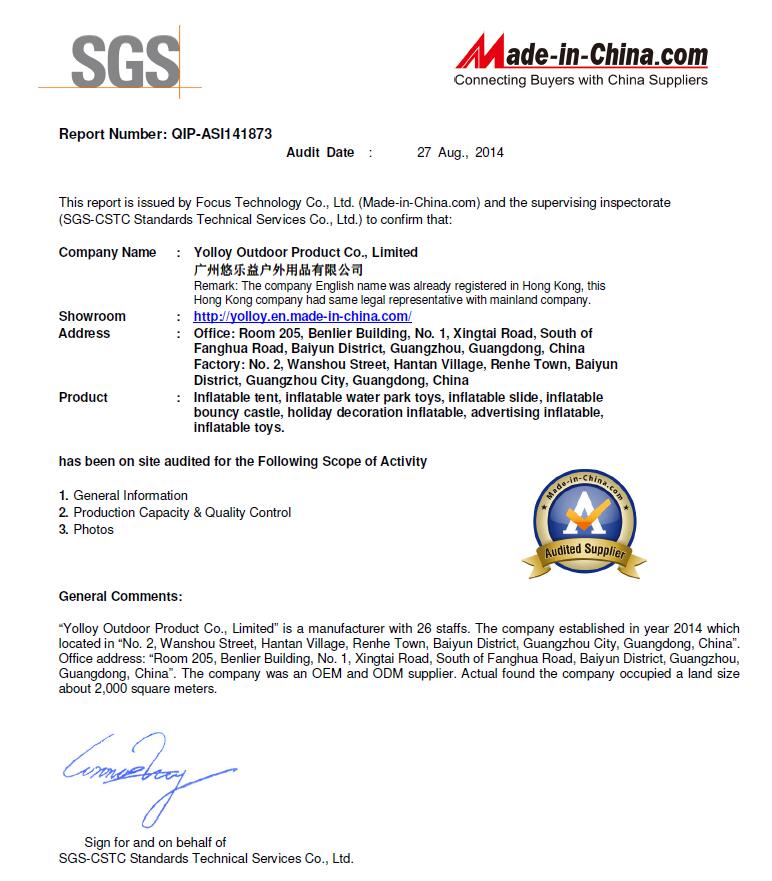
When you are ready to purchase an inflatable water park for sale, the supplier you choose will make or break your investment. Start by evaluating the manufacturer's product range. A supplier that covers inflatable water parks, swimming pools, boats, floating platforms, water balls, and aquatic play products under one roof can often provide better pricing and more cohesive designs through bundled orders. Look for a minimum order quantity of one piece — this signals that the manufacturer is willing to work with businesses of all sizes, from startups testing the market to established operators expanding their fleet.
Responsive communication is another critical factor. A manufacturer that answers emails and inquiries within 24 hours, provides timely updates during production, and is transparent about timelines and costs will save you weeks of frustration. Before placing an order, confirm that the supplier can accommodate your voltage requirements, provide the necessary certifications, and offer air or sea shipping to your destination. A pre-shipment inspection and testing process should be standard practice, not an optional extra.
Key questions to ask before ordering: What materials are used for the main body and seams? Which safety certifications do your products hold? Can you provide 3D renderings before production? What is the typical production time for a project of my size? Do you include a repair kit and blower with each order? What anchoring system do you recommend for my installation surface?
Sourcing a backyard inflatable water park is a significant decision that impacts your business for years to come. By prioritizing material quality, safety certifications, customization capability, and supplier reliability, you can secure a product that delivers guest satisfaction and strong returns. Whether you are launching a new water attraction or expanding an existing venue, partnering with an experienced manufacturer that offers a complete design-to-delivery service is the most reliable path to a successful installation.