Backpacking Essentials:
Sleeping Pad vs Inflatable Mattress – Yolloy's Pick
Have you ever spent a night tossing and turning in the middle of nowhere, desperately trying to find a comfortable position while every single pebble and tree root beneath your tent felt like a jagged mountain peak jutting directly into your spine? If you have, then you already know the absolute, undeniable, and golden rule of venturing into the wild: your trip is only ever as good as your sleep. You can pack the most exquisite freeze-dried meals, you can wear the most advanced moisture-wicking clothing, and you can hike through the most breathtaking valleys on earth, but if you wake up with a stiff neck, a frozen back, and a horrible attitude because you spent eight hours shivering against the cold, hard earth, your grand adventure is going to feel like a grueling punishment.
Welcome to the ultimate dilemma of backcountry sleeping arrangements. It is a debate that has raged around campfires, on hiking forums, and in gear shops for decades. Should you go for the rugged, traditional sleeping pad, or should you embrace the modern, cloud-like comfort of an inflatable mattress? It sounds like a simple choice, but once you start factoring in base weights, R-values, durability, packed sizes, and the specific type of trip you are planning, the decision becomes surprisingly complex. You are not just choosing a piece of foam or a pocket of air; you are choosing your recovery system for the trail.
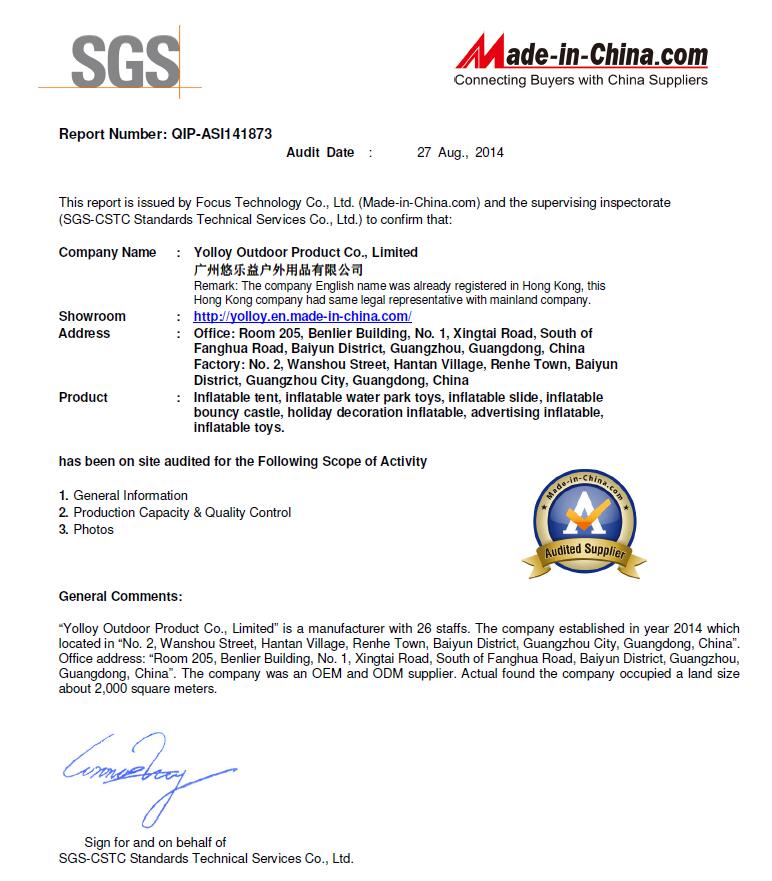
At Yolloy, we have spent years obsessing over the mechanics of inflatable structures. While you might know us from our large-scale, professional-grade innovations, our core philosophy remains unchanged regardless of the product scale: we are driven to provide customers with professional and qualified products. Whether we are crafting massive water park floating platforms or designing highly resilient fabrics for personal comfort, we understand what it takes to put a reliable barrier between you and the elements. In this comprehensive, deep-dive guide, we are going to tear apart the differences between sleeping pads and inflatable mattresses, analyze the science behind staying warm at night, look closely at materials and construction, and ultimately help you make the best choice for your specific style of outdoor exploration. Let us settle this campfire debate once and for all.
The Science of Sleeping on the Ground
Before we can even begin to compare the merits of different sleeping surfaces, we have to talk about what happens when a human body lies down on the ground. Most novice campers make a critical assumption: they believe that the primary job of a sleeping pad or mattress is to provide a soft cushion. While comfort is undeniably important, the actual primary function of your sleeping surface is insulation. It is a matter of basic thermodynamics. The ground is a massive heat sink. Even on a warm summer day, the earth retains a cooler baseline temperature than your 98.6-degree body. When the sun goes down and you lie down, the ground will relentlessly absorb your body heat through conduction. If you do not have an adequate barrier between you and the dirt, your sleeping bag—no matter how thick or how expensive it is—will not be able to keep you warm because the insulation on the bottom gets crushed under your body weight, rendering it virtually useless.
This is where the concept of the R-value comes into play. You will see this term thrown around a lot in the camping world. R-value is the measure of thermal resistance; it tells you how well a material resists the conductive flow of heat. A higher R-value means better insulation. For summer camping, an R-value of 1.0 to 2.0 might be perfectly sufficient. For three-season camping (spring, summer, and fall), you generally want to aim for an R-value between 2.0 and 4.0. If you are a winter warrior braving the snow, you need an R-value of 5.0 or higher to survive comfortably.
But here is where the pad versus mattress debate gets genuinely fascinating. How these two different types of gear achieve their comfort and their R-values involves entirely different approaches to engineering, physics, and material science. Let us break down the contenders.
Contender 1: The Traditional Sleeping Pad
When we talk about traditional sleeping pads, we are generally referring to closed-cell foam (CCF) pads or very basic self-inflating foam pads. If you picture a backpacker from the 1980s or 1990s, they almost certainly have a brightly colored, slightly bulky foam roll strapped to the very bottom or top of their external frame backpack. That is the classic closed-cell foam pad.
The Beauty of Unbreakable Simplicity
The greatest advantage of a closed-cell foam pad is its absolute, unquestionable reliability. Because it is essentially just a continuous sheet of dense foam containing millions of tiny, sealed air bubbles, there is virtually nothing that can break. You cannot pop it. You cannot puncture it. You do not have to worry about a rogue pine needle, a sharp rock, or your dog's claws destroying your bed for the night. You can throw it down onto a pile of jagged rocks, sit on it next to the campfire, step on it with your boots, and it will still perform exactly as intended when it is time to go to sleep.
Furthermore, they are incredibly lightweight. For the ultra-light backpacker who counts every single gram of gear and cuts the handles off their toothbrushes to save weight, a foam pad is often the go-to choice. They are also incredibly affordable, making them a fantastic entry-level piece of gear for anyone just getting into the hobby without wanting to make a massive financial commitment.
The Comfort Compromise
However, there is a very steep price to pay for this durability and weight savings, and that price is comfort. Let's be brutally honest: sleeping on a half-inch thick piece of foam is only marginally better than sleeping directly on the floor. If you are young, highly flexible, or exhaust yourself so thoroughly during the day that you can sleep on a bed of nails, you might be fine. But for the rest of us, especially side sleepers, a foam pad is a recipe for hip and shoulder pain. The rigid structure offers very little give, meaning your pressure points bear the brunt of your body weight all night long.
Additionally, they are incredibly bulky. While they do not weigh much, they do not compress at all. You cannot stuff them inside your backpack; they have to be strapped to the outside, where they can snag on branches, catch the wind, and generally act like a nuisance while you are navigating tight trails. Also, the R-value of a standard foam pad rarely exceeds 2.0, meaning they are strictly for warm-weather use unless you are combining them with another sleeping system.
Contender 2: The Modern Inflatable Mattress
Now, let us turn our attention to the modern marvel of backcountry comfort: the inflatable mattress. Forget everything you know about the massive, heavy, leaky air mattresses from your childhood sleepovers. The gear available today represents a massive leap forward in textile engineering and fluid dynamics. These are highly sophisticated sleep systems designed to trap air, reflect body heat, and contour to the human body, all while remaining surprisingly lightweight.
The Comfort Revolution
The primary reason anyone switches to an inflatable mattress is pure, unadulterated comfort. By suspending your body on two to four inches of air, inflatable mattresses completely eliminate the pressure points that plague foam pad users. Side sleepers rejoice: your hips and shoulders can sink comfortably into the mattress without ever touching the hard ground underneath. The ability to customize the firmness by simply letting out a little bit of air is a game-changer for getting a perfect night's rest.
At Yolloy, we have built our reputation on mastering the art of the inflatable. We know that the secret to a supportive air structure isn't just pumping it full of air; it is about how that air is managed inside the chamber. High-quality inflatable mattresses use intricate internal baffling systems—essentially interior walls—that prevent the air from shifting around wildly when you roll over. This prevents the "waterbed effect" and provides a stable, supportive sleeping surface. We apply the same rigorous engineering principles to small-scale comfort items as we do to our massive commercial structures, ensuring that the user experiences unmatched stability.
Packability and Warmth
Beyond comfort, the packability of inflatable mattresses is nothing short of miraculous. Because their volume is almost entirely made up of air when in use, they can be deflated and rolled up into a package roughly the size of a water bottle. This means you can easily store them inside your backpack, keeping your gear streamlined, protected from the rain, and perfectly balanced.
When it comes to warmth, modern inflatables have cracked the code. Early air mattresses were actually terrible for cold weather because the large volume of internal air would circulate and cool down, actively stealing your body heat. Today, high-end models feature synthetic insulation or heat-reflective metallized layers suspended within the air chambers. This traps the heat and stops internal air currents, allowing some inflatable mattresses to boast incredible R-values of 6.0 or higher, making them perfectly suitable for sleeping on a glacier.
The Achilles Heel: Durability
Of course, the inflatable mattress is not without its drawbacks. The most glaring issue is the risk of a puncture. A sharp rock, a stray thorn, or a hot ember from the campfire can turn your luxurious bed into a useless piece of fabric in a matter of seconds. Field repairs are possible (and highly recommended to learn), but waking up flat on the ground at 3:00 AM because of a slow leak is an experience every inflatable mattress user dreads.
Furthermore, inflating them requires effort. After hiking 15 miles, blowing up a mattress with your own lungs can leave you feeling lightheaded and exhausted. Fortunately, many modern versions come with pump sacks or can be inflated with micro-electronic pumps, mitigating this issue entirely. Lastly, they are generally more expensive than their foam counterparts, though your spine might argue that the investment is well worth the cost.
The Yolloy Perspective on Materials and Manufacturing
When discussing the durability and reliability of inflatable products, you cannot ignore the importance of raw materials and manufacturing standards. This is an area where Yolloy absolutely excels. Many cheap inflatable mattresses on the market are made from flimsy nylon that degrades quickly under UV exposure and repeated folding. Our approach to creating inflatables is drastically different, deeply rooted in our experience producing heavy-duty commercial gear.
We utilize premium materials like waterproof fireproof PVC tarpaulin for robust applications, ensuring that the fabric can withstand serious abrasion and harsh environmental conditions. For products that require maximum flexibility, low weight, and skin-friendly contact—such as high-end water gear and sleeping surfaces—we rely heavily on eco-friendly TPU (Thermoplastic Polyurethane). Unlike traditional PVC which can sometimes be stiff or have a chemical odor if not properly treated, eco-friendly TPU is inherently non-toxic, completely odorless, and incredibly resistant to hydrolysis (breakdown from water exposure). It is also highly elastic and offers superior abrasion resistance compared to standard nylon, making it the perfect material for an inflatable mattress that needs to survive the backcountry.
Our strict adherence to quality is non-negotiable. Every item we produce passes through rigorous quality supervision rules, often meeting or exceeding EN71 safety standards. This is why we maintain a 95% on-time delivery rate and offer a 24-hour response time to our clients; we believe in total transparency and reliability. Whether we are building an enormous transparent bubble lawn camping tent for a luxury glamping resort or providing the foundational knowledge for your personal sleep system, we ensure that the engineering is flawless. We even offer comprehensive custom design services. If a client needs a specialized inflatable shape or a specific combination of materials, our designers work tirelessly, providing simulated renderings and tweaking the blueprints until the customer is completely satisfied before a single piece of fabric is cut.
Head-to-Head Comparison Matrix
To help clarify the overwhelming amount of information, we have compiled a detailed, head-to-head comparison between traditional sleeping pads (specifically closed-cell foam) and modern inflatable mattresses. This table breaks down the crucial factors you need to consider before making your purchase.
|
Feature / Metric
|
Traditional Foam Sleeping Pad
|
Inflatable Mattress
|
|
Primary Advantage
|
Indestructible reliability; zero chance of puncture.
|
Unmatched comfort; conforms to body shape.
|
|
Comfort Level
|
Low. Rigid surface, hard on hips and shoulders.
|
High. 2-4 inches of loft completely isolates pressure points.
|
|
Insulation (R-Value)
|
Generally 1.5 to 2.5 (Summer / Mild Weather).
|
Ranges from 2.0 to 7.0+ (Suitable for deep winter).
|
|
Packability & Size
|
Poor. Very bulky, must be strapped to the outside of the pack.
|
Excellent. Compresses down to the size of a water bottle.
|
|
Weight
|
Extremely lightweight (often under 1 lb).
|
Varies; ultralight models exist, but generally slightly heavier.
|
|
Durability
|
Exceptional. Can be used as a seat on sharp rocks or thorns.
|
Vulnerable to punctures; requires care and site preparation.
|
|
Ease of Use
|
Instant. Unroll and it is immediately ready.
|
Requires 2-5 minutes of inflation (lung power or pump sack).
|
|
Price Point
|
Very affordable. Great budget option.
|
Moderate to High investment, depending on technology.
|
How to Choose Based on Your Camping Style
Ultimately, there is no single "best" answer. The right choice depends entirely on how you recreate outdoors. Let us look at a few common scenarios and determine which sleep system is the winner.
The Gram-Counting Thru-Hiker
If you are hiking the Appalachian Trail or the Pacific Crest Trail, you are walking 20+ miles a day for months on end. Every single ounce in your pack feels like a pound by the end of the day. For a long time, thru-hikers swore by the closed-cell foam pad because it was practically weightless and couldn't pop. However, in recent years, the trend has shifted. Because physical recovery is so crucial on a long-distance hike, many thru-hikers now opt for ultralight inflatable mattresses. The improved sleep quality leads to better muscle recovery. The risk of a puncture is a fair trade-off for waking up refreshed rather than battered. If you are extremely hard on your gear, go foam. If you need recovery, go inflatable.
The Weekend Warrior and Car Camper
If you drive to your campsite, pitch a massive tent, and spend the weekend relaxing by the lake, weight and packability are completely irrelevant to you. In this scenario, an inflatable mattress wins flawlessly. You can bring a luxurious, 4-inch thick air mattress, inflate it with a battery-powered pump, and sleep as comfortably as you do in your own bedroom at home. This is the realm of outdoor camping where comfort is king, and dealing with a rigid foam pad makes zero sense.
The Extreme Mountaineer
When you are camping on a glacier or attempting a high-altitude summit, the rules change. Extreme cold is deadly, and gear failure is not an option. Interestingly, the best solution here is actually a hybrid approach: using both! Mountaineers will lay down a closed-cell foam pad directly on the snow to provide a robust, unbreakable base layer of insulation, and then place a high-R-value inflatable mattress on top of it. This dual-system guarantees that even if the inflatable mattress suffers a catastrophic puncture that cannot be fixed, the climber still has a minimum baseline of insulation from the foam pad to prevent hypothermia.
The Glamping Enthusiast
If you are setting up an elaborate basecamp—perhaps utilizing something as stunning as a transparent bubble lawn camping tent or an inflatable snow globe tent—you want the interior to match the premium exterior. In these luxurious setups, you would never use a basic foam pad. You would utilize high-end, heavily insulated inflatable mattresses or even double-height air beds. Because these environments are controlled and protected, the risk of punctures is minimal, allowing you to maximize comfort and enjoy the panoramic views under the stars without a single ache or pain.
"Whether you are pushing your physical limits on a rugged mountain trail or curating a luxurious backyard glamping experience, the foundation of your adventure always comes down to the quality of your rest. Choose gear that respects your body's need for recovery."
Caring for Your Sleep System: Maintenance and Longevity
Buying a high-quality sleep system is an investment, and like all investments, it requires maintenance. Let us talk about how to keep your gear functioning perfectly for years, ensuring that your outdoor camping experiences remain comfortable.
Maintaining a Foam Pad
There isn't much you need to do here, which is the beauty of the design. However, you should try to keep it relatively clean. Wipe off mud and pine sap with mild soap and water. When storing it at home, do not leave it compressed under heavy boxes in your garage, as over time, the foam cells can permanently crush and lose their insulating properties. Simply leave it unrolled or loosely rolled in a dry closet.
Maintaining an Inflatable Mattress
Inflatables require far more care. First and foremost, never over-inflate your mattress. When you lie on it, the air pressure inside increases drastically. If you blow it up until it is drum-tight and then throw your body weight onto it, you risk blowing out the internal baffles or creating a micro-tear in the seams. It should be firm, but with enough give that it contours to you.
Site preparation is absolutely crucial. Before you throw your mattress into the tent, thoroughly sweep the floor of your tent. Run your hands over the ground beneath the tent floor to check for hidden rocks, sweetgum balls, thorns, or sharp twigs. A 30-second sweep can save your mattress from a catastrophic puncture.
If you do get a leak, do not panic. Field repair is a skill every camper should possess. Always carry a small patch kit (which usually includes alcohol wipes, a small tube of specialized adhesive, and fabric patches). To find a slow leak in the field, inflate the mattress fully and press down on it while holding your ear close to the fabric, listening for a hiss. If you cannot hear it, try rubbing a mixture of soapy water over the surface; the leak will create visible bubbles. Once found, clean the area meticulously with alcohol, apply the adhesive and patch, and wait the recommended time before reinflating. The high-quality fabrics we champion at Yolloy, such as eco-friendly TPU, bond exceptionally well with field repair adhesives, making permanent fixes relatively easy.
When you return home, your storage method dictates the lifespan of your inflatable. Never store it tightly rolled up in its stuff sack for months on end. This puts permanent stress on the folds and can trap moisture inside. If you inflated the mattress using your mouth, the moisture from your breath is trapped inside, which can lead to mold growth that destroys the internal insulation. When you get home, unroll the mattress, leave the valve completely open, and store it flat under a bed or hung up loosely in a closet. This allows any internal moisture to evaporate and keeps the materials relaxed.
The Future of Camping Comfort
The outdoor industry is constantly evolving, and the line between rugged survival gear and luxurious comfort is blurring. We are seeing incredible advancements in material science. The fabrics are getting lighter while simultaneously becoming more puncture-resistant. Internal insulation structures are becoming more complex, trapping heat with unprecedented efficiency.
At Yolloy, our vision of the future is bright and constantly expanding. Our commitment to continuous innovation is evident in our robust product roadmap. As we look forward to introducing groundbreaking 2025 releases—such as space-saving inflatable car wash mats, rugged anti-snow tunnel tents, and mesmerizing inflatable light pillars—we apply the same rigorous research and development to every sector we touch. We believe that whether a product is meant to shelter a vehicle, entertain a crowd on the water, or provide a single hiker with a night of deep sleep, it must be built with uncompromising integrity.
"Sleep is the ultimate wilderness fuel. Do not compromise on the foundation of your adventure."
The Final Verdict
So, which should you choose? If you are on a razor-thin budget, if you are hiking through terrain composed entirely of thorns and razor-sharp volcanic rock, or if you simply prefer the peace of mind that comes with indestructible gear, the traditional closed-cell foam sleeping pad is your steadfast companion. It will never let you down, even if it leaves you a bit sore in the morning.
However, if you value a good night's sleep above almost all else, if you are a side sleeper, if you camp in colder weather and need high R-values without extreme bulk, and if you are willing to spend an extra two minutes clearing your tent site of debris, the modern inflatable mattress is the undisputed champion. The technology has simply become too good to ignore. The weight penalty is practically gone, and the comfort levels are astronomical compared to a decade ago.
Whichever path you choose, remember that the goal of heading into nature isn't to suffer; it is to connect, explore, and recharge. Equip yourself intelligently, understand the science of your gear, and respect the environment. At Yolloy, we will continue to do our part by engineering the finest inflatable solutions on the market, standing firmly behind our promise to provide customers with professional and qualified products. Sleep well, hike far, and we will see you out on the trails.